
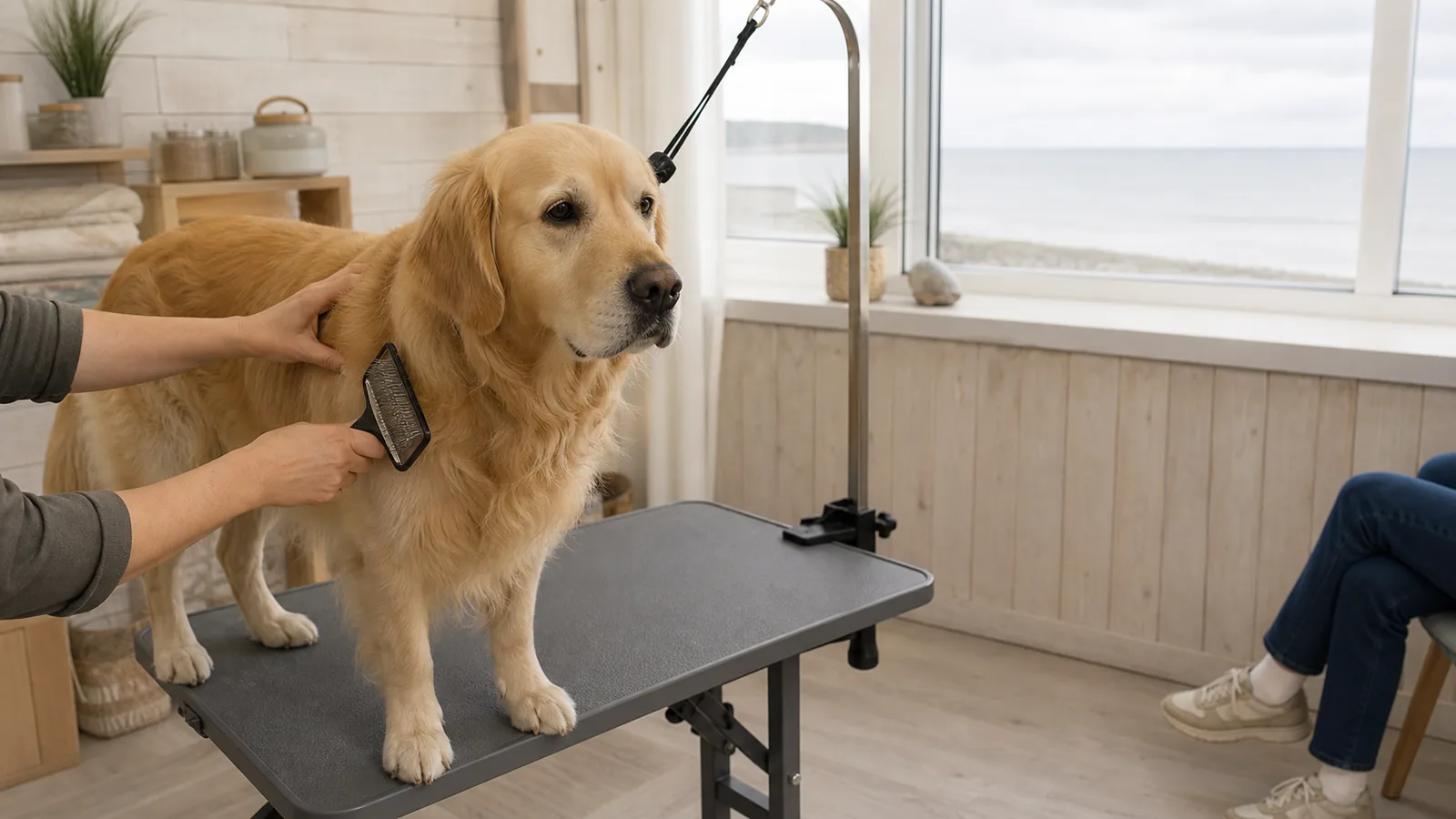
Sometimes. At The Floof Spa, ask when booking if you would like to stay for a first visit. Owner presence may help some dogs settle, but it can distract others or make safe handling harder because they keep trying to reach their person. Joanne can agree a case-by-case plan, watch your dog's body language and use breaks or a shorter session rather than forcing the groom.
Can owners stay at The Floof Spa?
The Floof Spa is a one-to-one Herne Bay studio, so an owner-present first visit may be possible when agreed with Joanne in advance and when it is likely to help the individual dog. It is not a blanket promise that every owner can watch every stage of every appointment.
If your dog remains focused on you, repeatedly tries to leave or cannot be positioned safely, Joanne may suggest a brief handover or asking you to step away. The plan should respond to the dog in front of her rather than follow a rigid rule.
When staying may help
- A puppy or rescue dog is meeting the groomer and environment for the first time.
- Your dog has a known handling sensitivity and your calm presence helps them explore.
- A short introduction is planned rather than a complete haircut at any cost.
- You can remain quiet, sit where asked and let the groomer lead the interaction.
Owner presence is only one part of the setup. The puppy first-groom service and rescue dog grooming approach also use a quiet room, one dog at a time and breaks when needed.
When stepping out may work better
- Your dog continually tries to reach you or watches the door instead of engaging with the groomer.
- Calling, vocalising or attempts to leave increase while you are visible.
- Your dog guards your space or becomes harder to reposition safely.
- The dog settles once the handover ends and can take breaks without scanning for you.
Stepping out is not rejection, and staying is not automatically reassuring. Dogs read each situation differently. A short trial, with honest feedback afterwards, gives better information than assumptions about what an anxious dog should prefer.
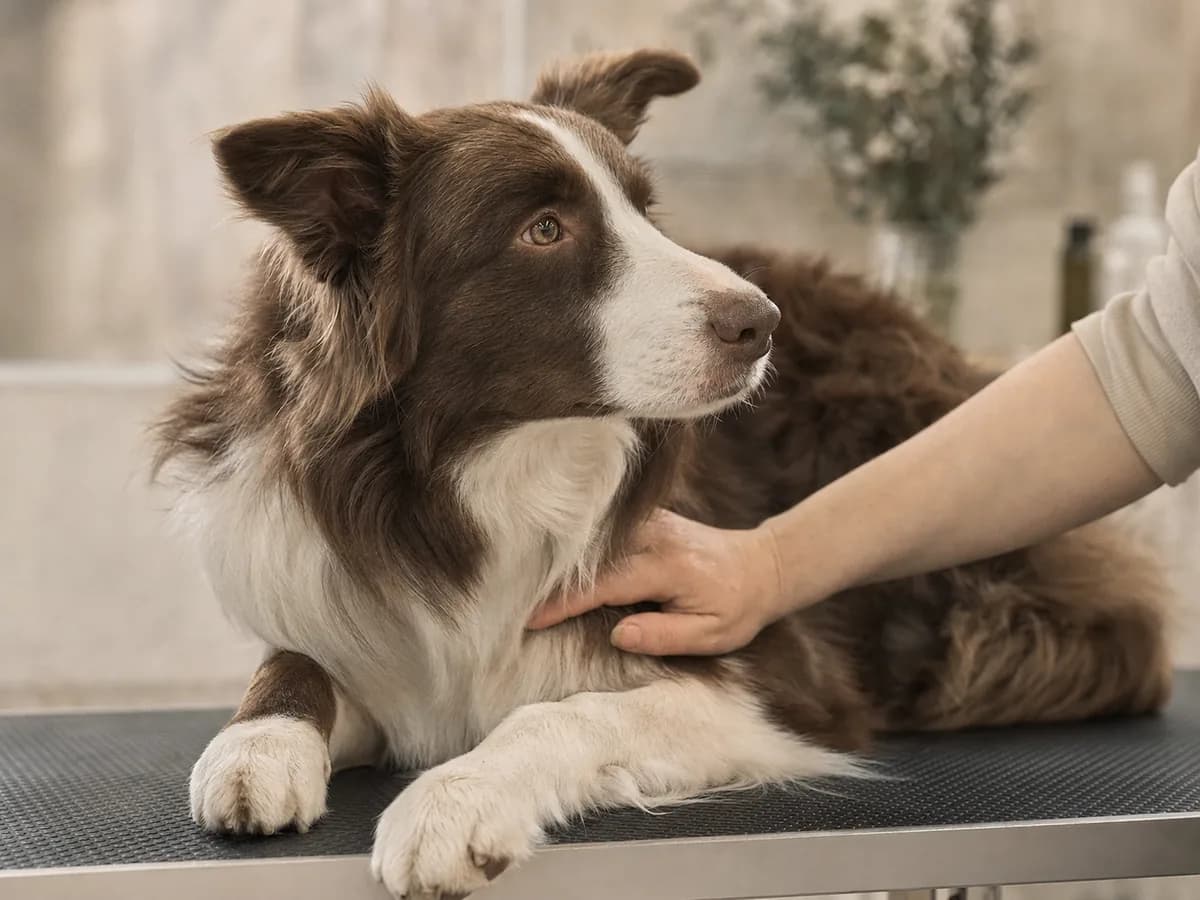
What a good owner-present visit looks like
- Agree the plan before arrival, including whether the visit is an introduction or a full service.
- Share fear, bite, pain, health and previous grooming history honestly.
- Sit where the groomer asks so equipment and exits remain safe.
- Avoid repeated calling, feeding or reassurance unless Joanne asks you to help.
- Let the groomer pause, change technique or finish early when needed.
- Accept that a partial groom can be a better outcome than forcing completion.
Owners should not be asked to improvise physical restraint. Safe handling needs a clear plan led by the groomer, with the dog's comfort and everyone's safety taking priority over the chosen style.
Signs the plan needs to change
Watch for a tense or lowered posture, tucked tail, turning away, repeated lip licking or yawning, hiding, becoming very still, growling or escalating attempts to escape. One signal in isolation does not prove distress; context, repetition and changes from your dog's normal behaviour matter.
The PDSA canine body-language guide explains common worried signals. Our guide to stress signs at the groomer applies them to grooming situations.
What if your dog cannot complete the groom?
A break, shorter introduction, different service or rebooking may be kinder. This does not mean your dog has failed. It gives the groomer information for a safer next step and avoids teaching the dog that escalating signals will be ignored.
The RSPCA's grooming advice recommends gradual, reward-based introductions and avoiding forced grooming when a dog is distressed. For repeated fear or aggression, a vet should first check for pain or illness; the RSPCA also explains how to find an appropriately accredited behaviourist.