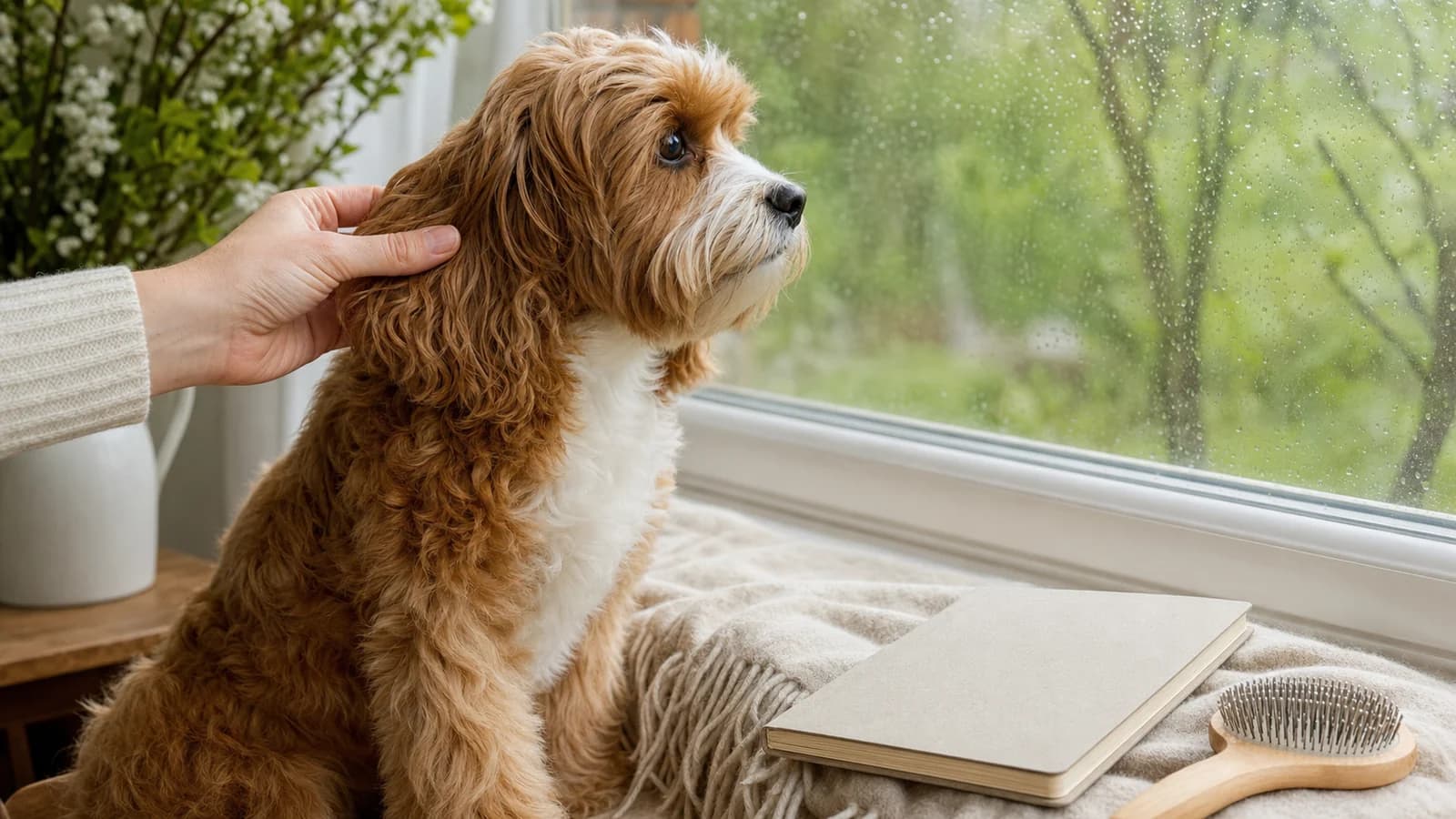
Cavapoo coats vary, so schedule grooming by texture, length and how easily a comb passes—not by breed name alone. As a poodle cross, a Cavapoo commonly needs brushing several times a week; wet, soft or curly coats may tangle faster. The Floof Spa uses six to eight weeks as a practical professional starting point, adjusted for coat condition and the chosen trim.
A flexible Cavapoo calendar
| Life stage or situation | Plan | Important qualification |
|---|---|---|
| Puppy | Tiny positive sessions for body, face, feet, brush and distant dryer sound | Follow your own vet's vaccination and socialisation advice; there is no universal first-groom week |
| Adult | Brush several times weekly and agree an individual professional rhythm | Six to eight weeks is a Floof starting guide, not a rule |
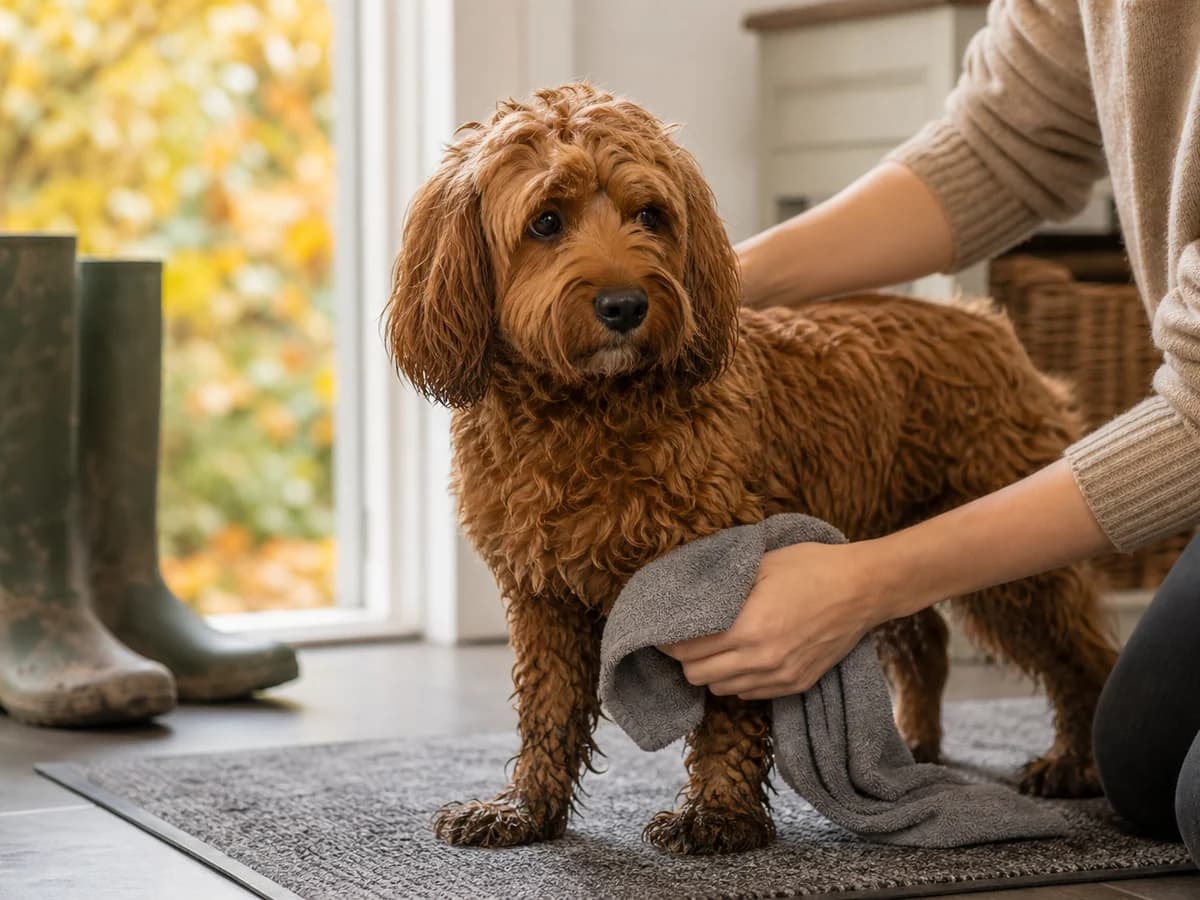
| Wet or muddy weeks | Dry thoroughly and check tangle-prone areas more often | A wet walk does not automatically require shampoo |
| Coat texture changes | Reassess tools, length and interval | Crossbreed coat cannot be predicted reliably from the name alone |
Why Cavapoo schedules differ
A looser, Cavalier-like coat
A softer, looser coat may appear easier to maintain but can still knot in furnishings and friction areas. Check ears, chest, armpits, legs and tail instead of judging only the body coat. Shedding and density can vary within the same cross.
A denser, poodle-like curl
Dense curls can conceal tangles close to the skin, particularly after rain or bathing. Brush in small sections with a suitable tool and use a comb only as a gentle check. If the comb stops, pulling harder is not a maintenance method; ask for professional assessment.
Mixed texture and soft furnishings
Many dogs do not fit neatly into either description. Body curl, ear feathering and tail texture may behave differently, so one tool or frequency may not suit every area. The preferred fluffy finish also demands more home care than a shorter practical trim.
High-priority coat areas
- Outer ear coat and the hair behind each ear; do not insert tools or products into the ear canal.
- Collar and harness lines, where rubbing can compact damp hair.
- Armpits, chest and belly, especially after wet walks.
- Legs, feet and between the pads, checked gently for debris.
- Tail and hygiene area, using professional trimming when length becomes impractical.
- Face furnishings, approached gradually so brushing does not become a restraint exercise.
Smell, discharge, repeated head shaking, persistent eye irritation, painful skin or sudden sensitivity needs veterinary advice. Routine coat care cannot diagnose or treat ear, eye or skin disease, and deeper cleaning can worsen a painful problem.
First-year handling goals
Brush and comb
Let the puppy investigate the tool, then make one or two easy strokes on an area where touch is already welcome. Build duration gradually. A calm ten-second session is more useful than holding a puppy still until the whole coat has been brushed.
Face and feet
Practise brief approach to the cheek or shoulder before moving towards the muzzle, and touch higher on the leg before asking for a paw. Release promptly and reward calm engagement. Stop if the puppy turns away, stiffens, repeatedly licks their lips or tries to escape.
Standing and equipment sounds
Use a secure non-slip surface and reward a natural short stand without forcing posture. Dryer or clipper sounds can be introduced quietly at a distance, but volume and proximity should increase only while the puppy remains comfortable.
These exercises prepare skills; they do not replace a professional introduction. Follow your vet's advice about vaccination and safe socialisation, then discuss the puppy first-groom service. The full puppy first-groom guide explains the visit itself.
Adult home care between appointments
- Start with a dry, calm dog on a non-slip surface.
- Divide longer coat into small sections and brush to coat level without scraping skin.
- Support the hair and work gently from the ends of a small tangle.
- Check with an appropriate comb only where it moves without force.
- Give extra attention to ears, harness line, armpits, legs, feet, tail and hygiene areas.
- End early when body language changes and ask for help with close resistance.
Use the practical how-to-brush guide and ask Joanne to demonstrate technique on your Cavapoo. Several times a week is an evidence-supported poodle-cross baseline, but a long or frequently wet coat can need more regular checks. Frequency cannot compensate for a harsh tool or painful technique.
When should the next appointment move earlier?
- Tangles return repeatedly despite careful, effective brushing.
- The coat remains dense or damp for a long time after wet walks.
- Face, feet or hygiene hair becomes difficult to maintain comfortably.
- A comb catches in areas that were clear soon after the last groom.
- Home sessions become lengthy or the dog starts avoiding them.
- The puppy or adult coat changes texture and the old routine stops working.
An earlier appointment or more practical trim can prevent maintenance becoming a battle. Conversely, a shorter coat that stays comfortable may allow an individually agreed longer interval. Review what actually happened between visits rather than treating six weeks as mandatory or eight weeks as safe for every dog.
Which Floof service fits the schedule?
The dedicated Cavapoo grooming service can include a practical Full Groom when coat length or style needs changing. Full Groom guide prices start at £40 and rise by size; coat condition and required work affect the final quote, which Joanne confirms before booking.
A Bath & Dry may help between haircuts when the coat remains brushable and no length change is needed. It does not include a haircut and is not a safe shortcut for a matted coat. Send current photos so service and timing can be assessed individually.
Sources and safety
The PDSA grooming guide says poodle-cross coats are prone to knots, especially when wet, and recommends brushing a few times weekly. The Royal Kennel Club grooming guide says coat type and length determine tools and time and recommends little-and-often early handling. The RSPCA guidance supports gradual, reward-based equipment introductions.