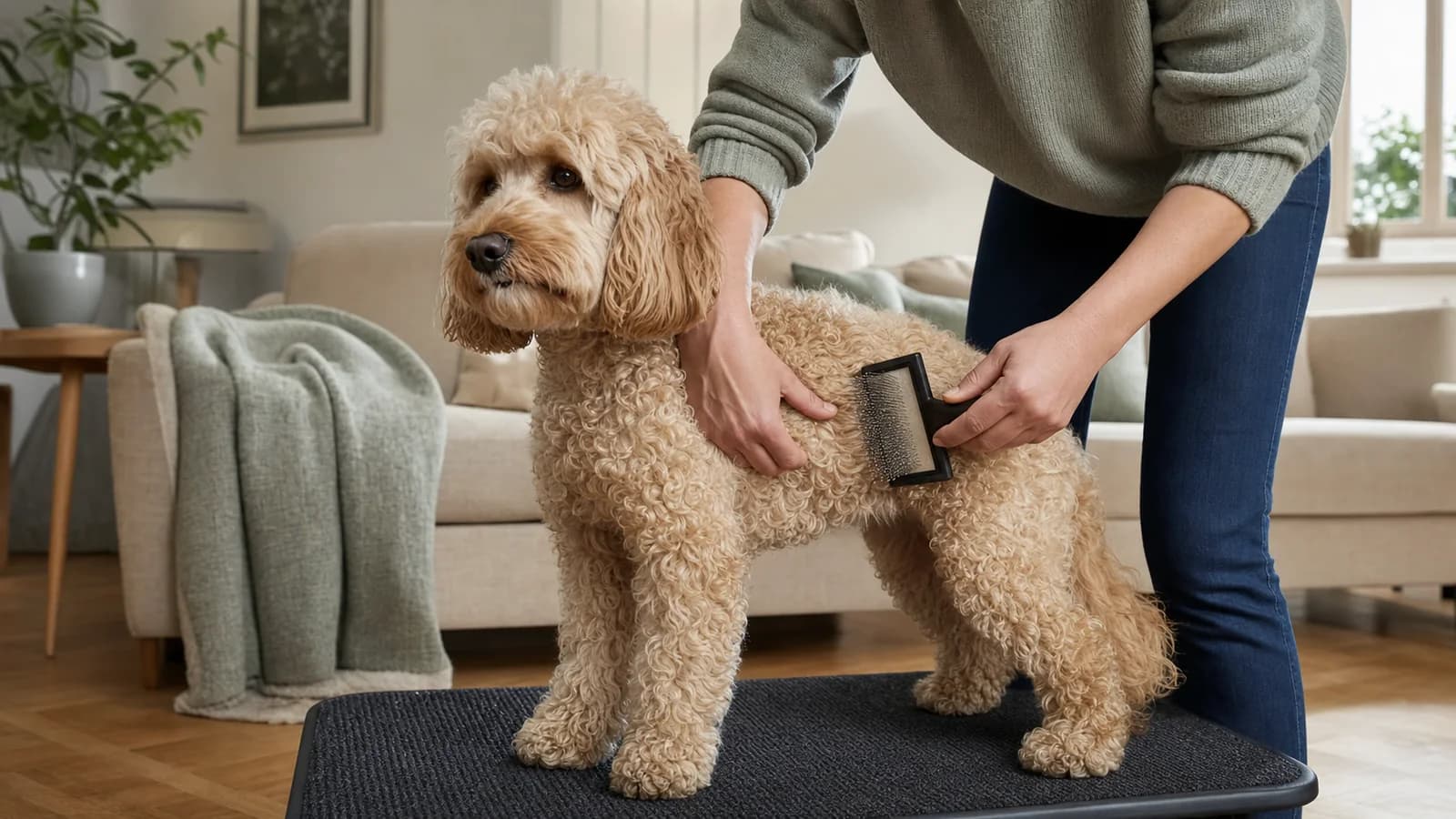
Brush a calm, dry dog in short sessions with tools suited to the coat. Start on an area where touch is already easy, work in small sections and support longer hair above a tangle while gently brushing the ends before moving nearer the roots. Use a comb only as a light check where appropriate. Never drag through a tight mat, and stop for pain, skin pulling, sores or worried body language.
Before brushing: match the tool to the coat
There is no single best dog brush. A tool must suit the coat's length, texture and density and be comfortable against the skin. Product labels and viral videos cannot show the pressure or angle that is safe for your particular dog, so ask a groomer for an in-person demonstration.
| Broad coat type | Possible starting tool | Main caution |
|---|---|---|
| Smooth or short | Grooming mitt or soft brush | Use light pressure on exposed skin |
| Short, dense shedding coat | Groomer-approved brush or undercoat rake | Do not scrape repeatedly |
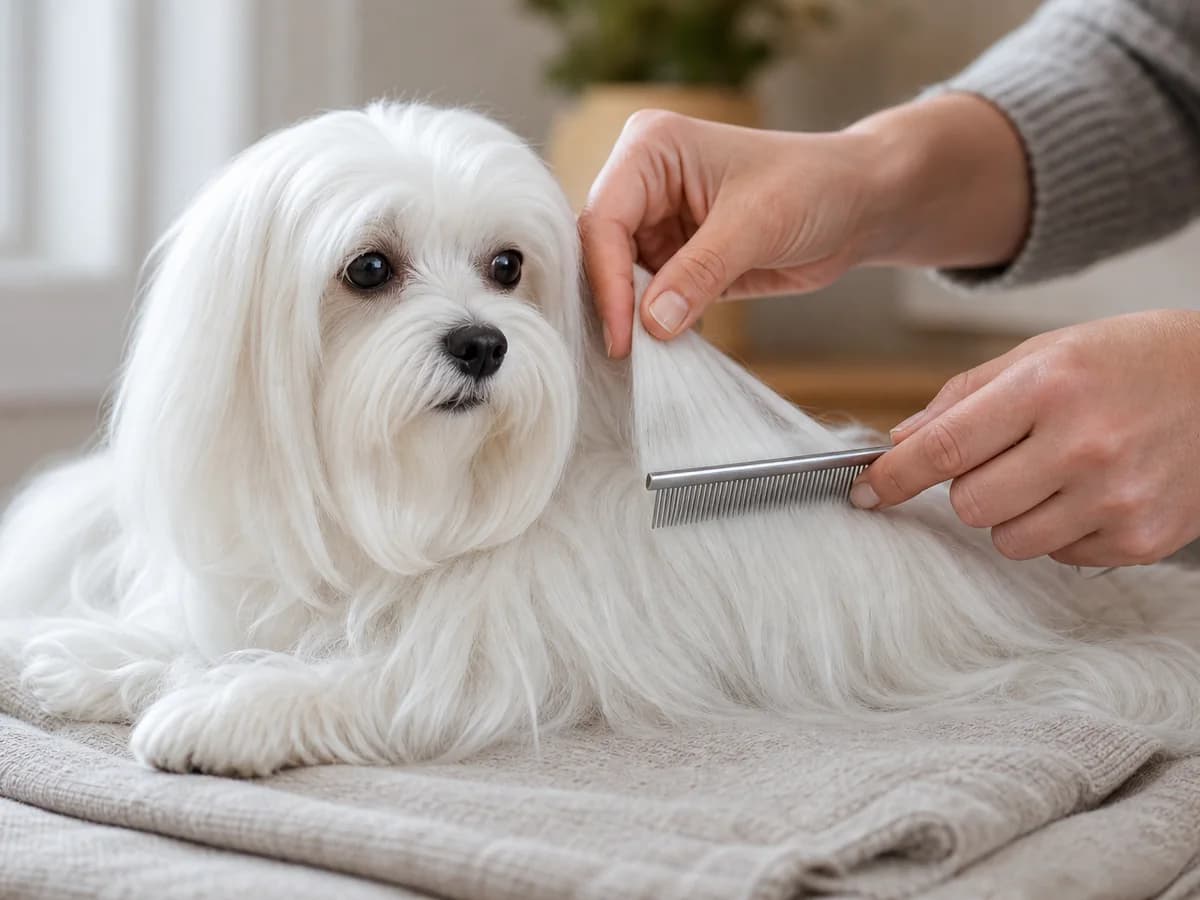
| Long or feathered | Pin, slicker or detangling brush plus suitable comb | Support hair and work from ends |
| Curly or poodle-cross | Suitable slicker or detangling brush plus comb check | Surface fluff can hide tangles near skin |
These are tool families, not prescriptions. Pin spacing, tooth length, sharpness and head size vary. Stop using any tool that scratches, catches normal coat repeatedly or leaves redness.
A safe step-by-step brushing routine
1. Set up a secure, comfortable place
Choose a non-slip floor or stable low surface where the dog can stand, sit or lie comfortably. Have the brush and rewards ready before inviting the dog over. Avoid balancing a worried dog on furniture or blocking the exit; a voluntary pause is useful communication.
2. Begin where handling is easy
Start at the shoulder or side rather than reaching immediately for paws, tail, ears or face. Offer a few gentle strokes, reward calm engagement and pause. If your dog cannot relax around the brush, work on seeing and sniffing the tool before trying to complete coat care.
3. Divide longer coat into small sections
Lift a narrow layer of hair so you can see and brush the coat beneath rather than skimming the fluffy surface. Work systematically in narrow rows, allowing each brushed layer to fall back. This is commonly called line brushing. Keep the tool angled away from the skin and use only enough pressure to move through the coat.
4. Support a loose tangle and start at the ends
Hold the hair gently between the tangle and the skin so movement does not pull directly on the dog. Use short strokes at the outer ends and move inward only as the hair loosens. If it tightens, sits against the skin or causes discomfort, stop rather than escalating force or reaching for scissors.
5. Check friction and hidden areas
Part the coat behind the ears, beneath the collar or harness, at the armpits, chest, belly, legs and tail. Brush around—not directly over—genitals, wounds, lumps or painful joints. A comb may lightly confirm that a suitable longer coat is clear, but it should never be used to rip through resistance.
6. Finish before patience runs out
A useful session can cover one body area. Finish while the dog is still coping, reward and release them. Short, predictable sessions are better than holding the dog in place until every section is complete.
How often should you brush?
PDSA gives broad starting points: long coats may need daily attention, medium coats a few times a week, short coats weekly, and poodle-cross coats a few times weekly because they are prone to tangling. Coat length, wet weather, harness friction, swimming and the chosen style can all change the practical frequency.
For breed-specific rhythm, use the Cockapoo schedule, Cavapoo schedule or Cocker Spaniel grooming guide. Those schedules support this technique guide rather than replacing an assessment of your dog's current coat.
Should you brush a wet dog?
Do not automatically brush a dripping, dirty coat. Rinse away sand, salt or grit and blot rather than rubbing long hair into knots. Brush when the coat and chosen tool can move comfortably without dragging. Some coat routines use products or work on damp hair, but follow advice demonstrated for your dog rather than improvising.
After sea or muddy coastal walks, follow the complete Whitstable beach coat-care routine for rinsing, drying, paws and ears before deciding whether brushing is appropriate.
Tangle, mat or veterinary problem?
- A small, loose tangle may separate gently while the hair and skin are supported.
- A dense knot that will not loosen, sits at skin level or joins a larger sheet is a professional job.
- Redness, broken skin, parasites, discharge, a painful lump or sudden coat change needs veterinary advice.
- Do not hide soreness beneath products or keep brushing because an appointment is approaching.
Established matting needs its own welfare decision. Read the matted-fur guide and ask a groomer to assess whether gentle removal or a shorter comfort-led finish is realistic. Never slide scissors beneath a mat; folded skin can be caught with it.
What if your dog hates being brushed?
Reduce the goal. Reward calm proximity to the brush, then one easy stroke, then stop. Stillness, a tense posture, turning away, repeated lip licking or yawning, growling and escape attempts can all signal concern in context. A growl is information, not disobedience. Do not pin, chase or punish the dog.
Our guide to stress signs at the groomer helps interpret the whole picture. Sudden sensitivity, pain on touch or repeated fear needs a vet first; an appropriately accredited behaviourist may be considered after veterinary assessment.
Professional help between appointments
Ask Joanne to demonstrate on your dog's coat during a Full Groom appointment. Bring the tool you already own so she can explain whether its size and tooth length suit the job. Advice can then reflect the actual trim, skin and areas your dog finds sensitive.
Sources and stop conditions
This routine draws on PDSA's coat-specific grooming guidance, the Royal Kennel Club's tool and handling overview and the RSPCA's reward-based grooming advice.