
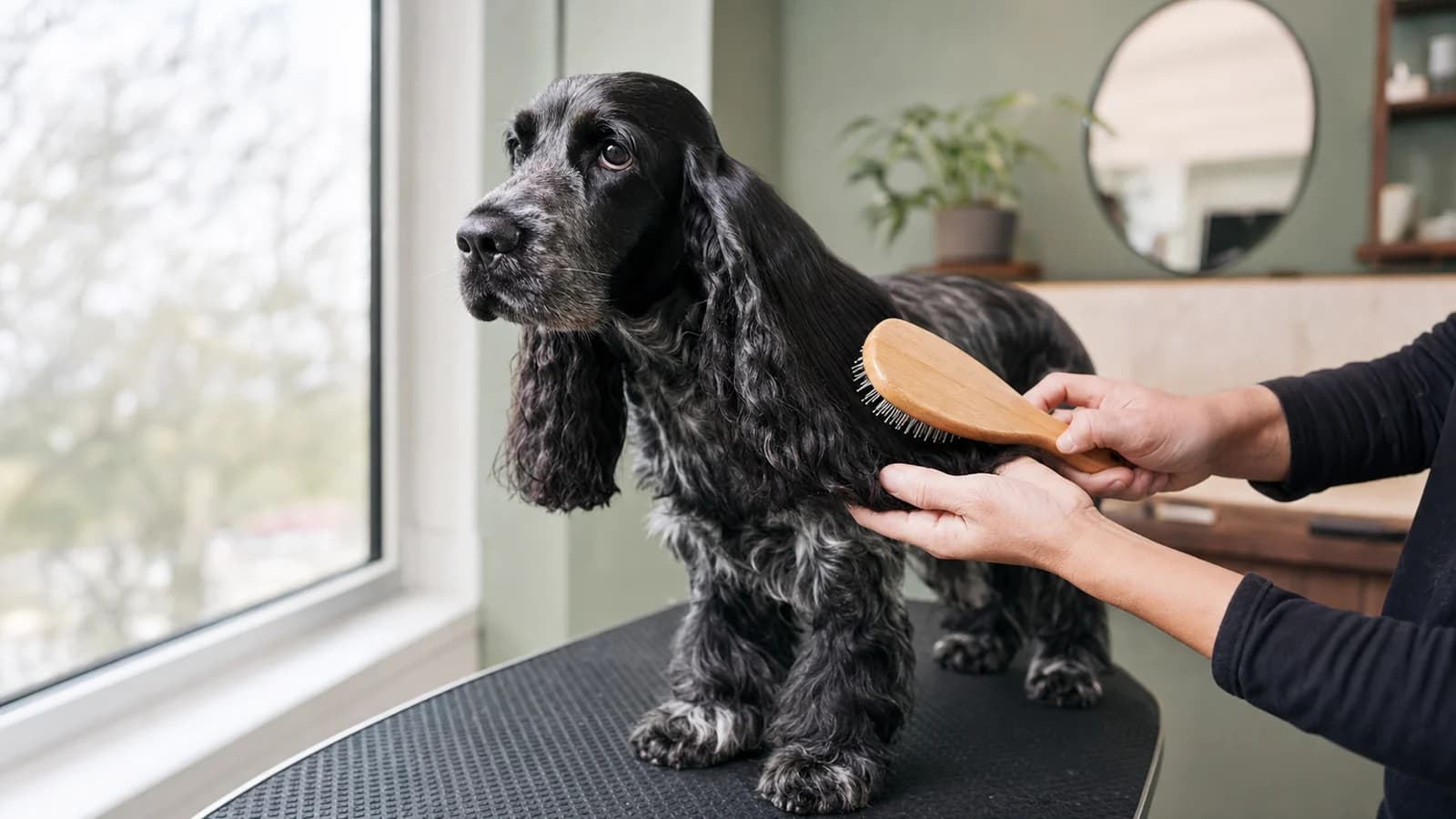
Cocker Spaniels need consistent coat care, but working and show-type coats can differ. PDSA broadly recommends daily brushing for Cockers and notes that working varieties may need less coat maintenance than show varieties. Check feathering, paws and outer ear coat after walks, then choose a natural tidy or practical pet trim around the individual coat and lifestyle.
Cocker Spaniel grooming at a glance
- Use daily brushing as PDSA's broad breed starting point, then adjust with professional advice for the individual coat.
- Check ears, chest, belly, legs, paws and tail after countryside, muddy or coastal walks.
- Dry feathering thoroughly after rain or rinsing before gently working through it.
- Agree professional timing by coat condition, type, chosen style and home-care success—not a universal interval.
- Treat ear smell, discharge, pain, swelling or repeated head shaking as veterinary concerns, not routine grooming jobs.
Working and show Cocker coats are not the same schedule
Show-type Cockers often carry fuller coat and feathering, while many working Cockers have a more practical coat. Individuals still vary, and appearance does not reliably prove lineage. PDSA notes that some show varieties may need clipping around every three months, but this is context—not a prescription. Set the interval from the actual coat, style, walks and home care.
The Cocker home-care map
Ears and ear feathering
Gently separate and brush the outer ear feathering in small sections, supporting the hair so knots do not pull the skin. Check behind the ears where friction can create close tangles. Look at the visible outer ear for debris, redness or soreness, but do not probe the canal, insert cotton buds or use unapproved cleaners.
Long ears can collect water, mud and food. Pat them dry and keep coat maintenance practical. A bad smell, discharge, repeated scratching or head shaking, swelling or pain needs a vet before anyone attempts deeper cleaning; a groomer cannot diagnose an ear condition.
Chest, belly and leg feathering
Feathering collects moisture, seeds and small debris. After walks, feel and look through the chest, belly and legs rather than brushing blindly. Work from hair ends towards the body while supporting above a small tangle. Stop if you find an object against or through the skin, painful matting, swelling or a wound.
Armpits, collar, harness and hygiene areas
These friction areas can mat while the visible back remains smooth. Keep checks gentle and do not repeatedly scrape sensitive skin with a slicker. Hygiene hair can be professionally shortened when it becomes impractical; avoid scissors close to folded skin or genitals.
Paws, pads and post-walk checks
Inspect the tops of feet, between toes and visible pad edges after countryside or beach walks. Remove only loose surface debris that comes away without pulling. Do not dig for suspected grass seeds or cut embedded material. Sudden licking, limping, swelling, a puncture or persistent pain warrants veterinary attention.
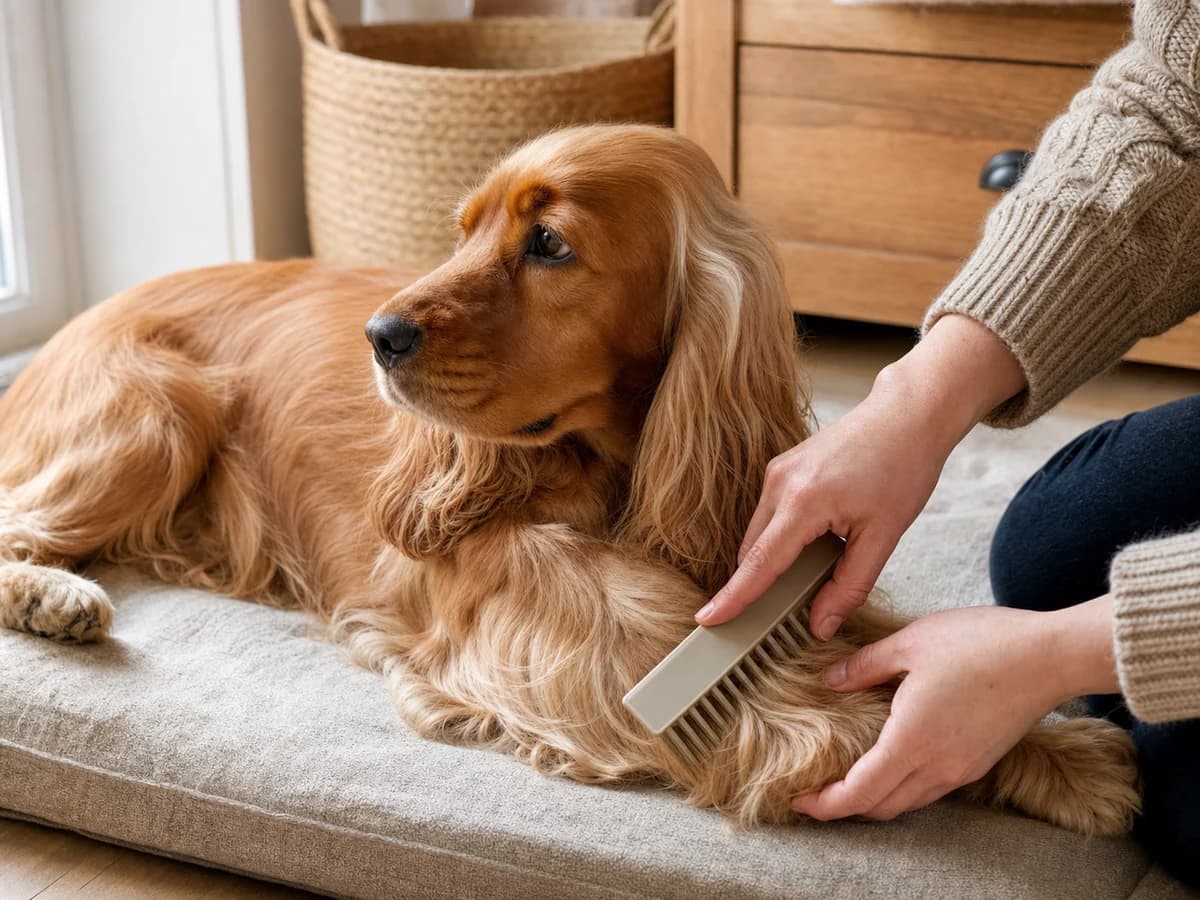
How to brush without only smoothing the surface
- Settle a dry dog on a comfortable, non-slip surface and start on an easy body area.
- Divide feathering or longer coat into small sections so you can see what the brush reaches.
- Support hair above a small tangle and work gently from the ends rather than pulling from the skin.
- Use a coat-appropriate comb as a light check only where it passes without force.
- Check behind ears, armpits, harness lines, belly, legs, paws, tail and hygiene areas.
- Stop for pain, skin pulling, repeated avoidance or close matting and ask for professional help.
Ask Joanne to demonstrate suitable tools and angles on your dog. The complete between-grooms brushing tutorial covers sectioning and stop signs. Daily frequency is not permission to brush sore skin or force a worried dog.
Natural tidy, hand stripping or practical pet trim?
A natural tidy preserves more outline while neatening feet, hygiene areas and feathering, but still needs home maintenance. Hand stripping removes suitable mature hair and is coat-specific; Floof lists it as a £15 add-on only when appropriate. A clipped or scissored pet trim can make muddy, active coats more manageable. None is automatically correct: condition, lifestyle, appearance and comfortable handling determine the choice.
Joanne can discuss these options through the Cocker Spaniel grooming service. A Full Groom is appropriate when length or style needs changing; final price is confirmed from size, coat and required work.
Bathing and drying after mud or sea
Fresh lukewarm water may be enough to rinse surface salt or mud. Use dog-specific shampoo only when a proper wash is needed, and dry the coat thoroughly—especially ears, chest, belly and feathering. Work through the coat once it can be brushed comfortably rather than attacking wet knots.
For a clean and brush-out without a haircut, consider a Bath & Dry. If loose undercoat is the main concern, Joanne may assess whether the De-shed service is suitable. Neither is automatically required after every wet walk. Use the Whitstable beach coat-care routine after coastal outings.
When to use a groomer—and when to call a vet
Ask a groomer about routine brush-outs, professional bathing and drying, coat shaping, manageable feathering, nail care and mats that cannot be worked safely at home. Tell them in advance about handling sensitivities and any known skin or ear history.
Call a vet for painful, smelly or discharging ears; repeated head shaking; inflamed or broken skin; a suspected embedded grass seed; sudden lameness; a painful lump; or abrupt behaviour change on touch. Do not use grooming to investigate or treat these signs.
Sources and safety
The PDSA Cocker Spaniel guide describes Cockers as high-maintenance, recommends daily brushing and post-walk checks, and distinguishes broad working and show-coat needs. Its general grooming guidance says smelly or itchy ears and wax or hair build-up should be discussed with a vet before cleaning. The Royal Kennel Club breed profile provides breed context.