
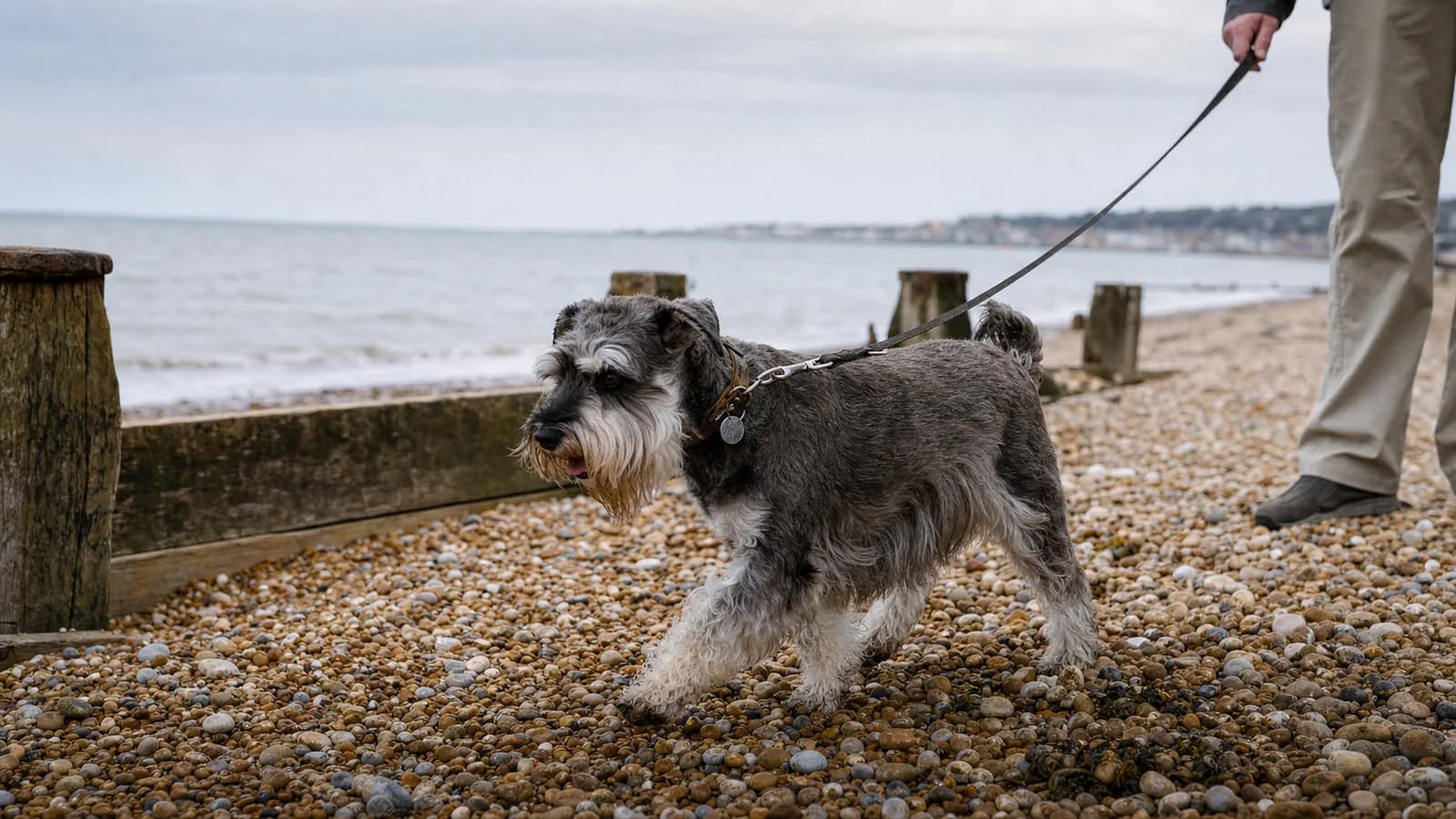
After a Whitstable beach walk, offer fresh drinking water, rinse off seawater with fresh lukewarm water, towel-dry thoroughly and gently brush once the coat is dry enough to work without pulling. Check paws, between toes, feathering and the outside of the ears for sand, cuts or debris. Contact a vet for pain, redness, discharge, vomiting or unusual lethargy.
The 10-minute post-beach coat routine
1. Offer fresh water and stop saltwater licking
Give your dog clean drinking water after the walk and discourage drinking from the sea. Swallowed seawater can cause vomiting and diarrhoea and, in larger amounts, potentially serious dehydration and salt-related illness. Keep an eye on dogs who chase waves or retrieve toys because they may swallow water repeatedly without appearing to drink.
2. Rinse seawater and sand away
Use fresh lukewarm water, working gently through the belly, legs, paws and any coat that was immersed. A thorough rinse is often enough; dog shampoo is not required after every walk. Never use human shampoo because its formulation is not designed for canine skin.
3. Towel-dry, then dry dense areas carefully
Press and blot rather than rubbing tangles into a long or curly coat. Pay attention between toes, beneath the collar or harness, under the front legs, around the belly, through feathering and over the outer ear flaps. Dense coats can feel dry on top while remaining damp nearer the skin.
4. Brush without pulling
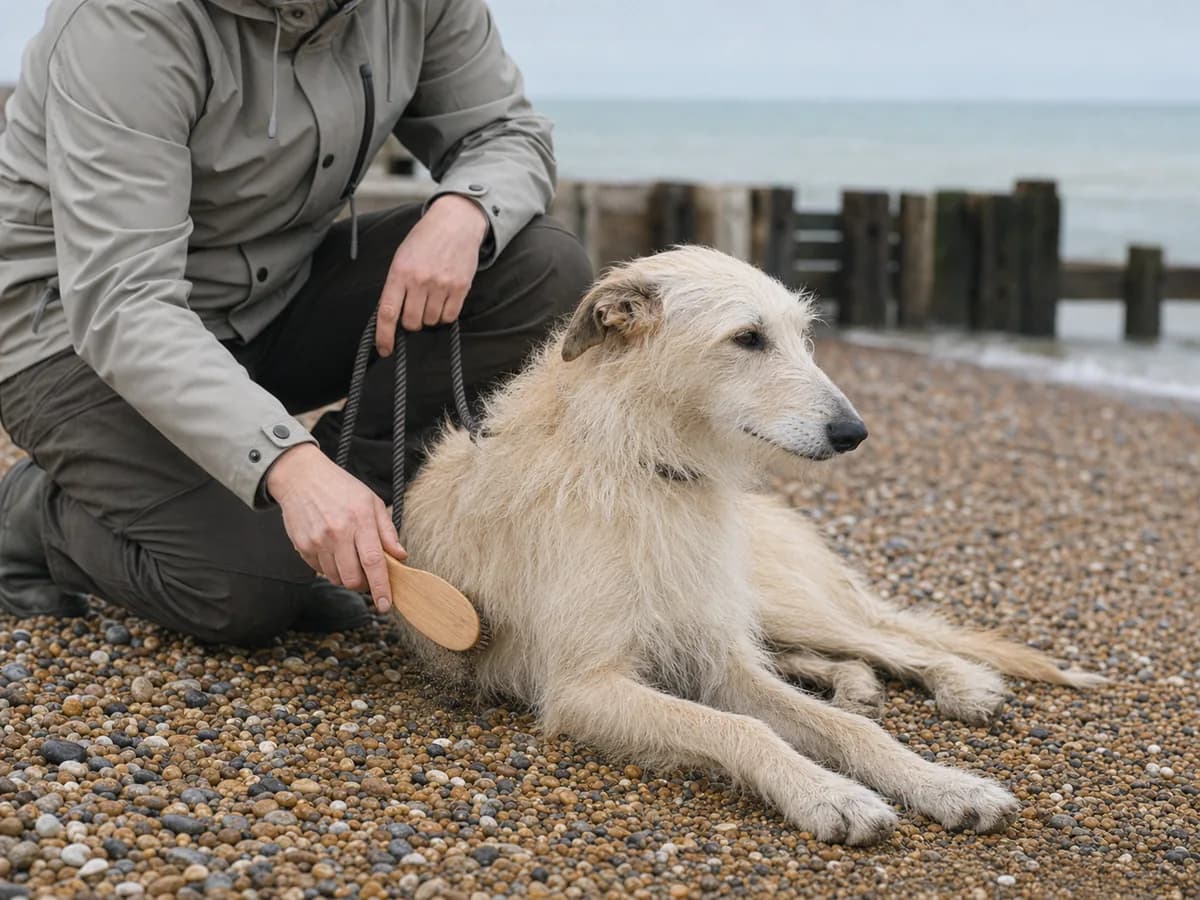
Let the coat become dry enough for your chosen tool to move without dragging. Work in small sections with a brush or comb suited to the coat. If you find a tight tangle or matt near the skin, stop rather than repeatedly pulling or cutting blindly.
5. Inspect paws, skin and ears
Check pads and between the toes for shingle, shell, cuts, soreness or other debris. Look over exposed skin for redness or swelling. Check only the visible outer ear and note persistent head shaking, smell, discharge or pain; do not push cotton buds into the ear canal.
Coat-specific beach care
Curly and poodle-cross coats
Curly and wavy coats can tighten into tangles when wet. Rinse thoroughly, blot carefully and brush in manageable sections once the coat is ready. Check friction areas around the harness, legs, ears and tail rather than brushing only the fluffy surface.
Spaniel and feathered coats
Focus on ears, chest, legs, paws and belly feathering, where sand and small debris collect. A practical trim may make frequent coastal walks easier to manage; see the Cocker Spaniel grooming guide.
Double coats
Rinse through the dense coat and dry towards the skin where your dog can tolerate this safely. Once dry, use an appropriate tool to lift loose coat. Do not shave a healthy double coat simply to make beach drying quicker; ask a groomer about practical undercoat care.
Short coats
Short coats still benefit from a fresh-water rinse and paw and skin inspection, but intensive brushing may not be necessary. Dry folds and contact areas carefully where relevant to your dog.
What not to do
- Do not use human shampoo or shampoo after every walk by default.
- Do not force a brush or scissors through tight matting close to the skin.
- Do not put cotton buds or home remedies into the ear canal.
- Do not leave dense areas persistently damp or ignore pain, redness or discharge.
- Do not allow repeated seawater drinking while playing or retrieving.
When home care is enough — and when to book
| Situation | Next step |
|---|---|
| A little sand or mud; coat brushes comfortably | Fresh-water rinse, careful drying and home brushing may be enough |
| Coat stays gritty, salty, shedding or difficult to dry; no haircut needed | Ask about a Bath & Dry |
| Longer coat also needs reshaping or face, paw and hygiene trimming | Ask about a Full Groom |
| Wound, painful or red skin, persistent itch, ear pain, smell or discharge | Contact a vet |
| Vomiting, diarrhoea, marked thirst, weakness or unusual lethargy after seawater | Contact a vet promptly |
Whitstable owners travel to The Floof Spa's Herne Bay studio; there is no Whitstable branch. Compare Bath & Dry and Full Groom if home drying or coat maintenance has become difficult.
Whitstable beach rules and water checks
Canterbury City Council says most of the district's coastline welcomes dogs year-round, but seasonal exclusions apply from 1 May to 30 September in specified central Herne Bay and Tankerton sections. Check the council's current dogs-on-the-beach guidance and signs at the beach, because controlled zones can change. Keep your dog supervised and remove waste.
Before swimming, check current conditions rather than relying on an old rating. The Environment Agency's Swimfo bathing-water profiles publish designated bathing-water information, including seasonal sampling and pollution-risk updates where available.
Sources and urgent warning signs
The PDSA beach-safety guide covers seawater ingestion, fresh-water rinsing, sharp objects and other coastal risks. Its dog ear-problem guide explains signs that need veterinary attention.