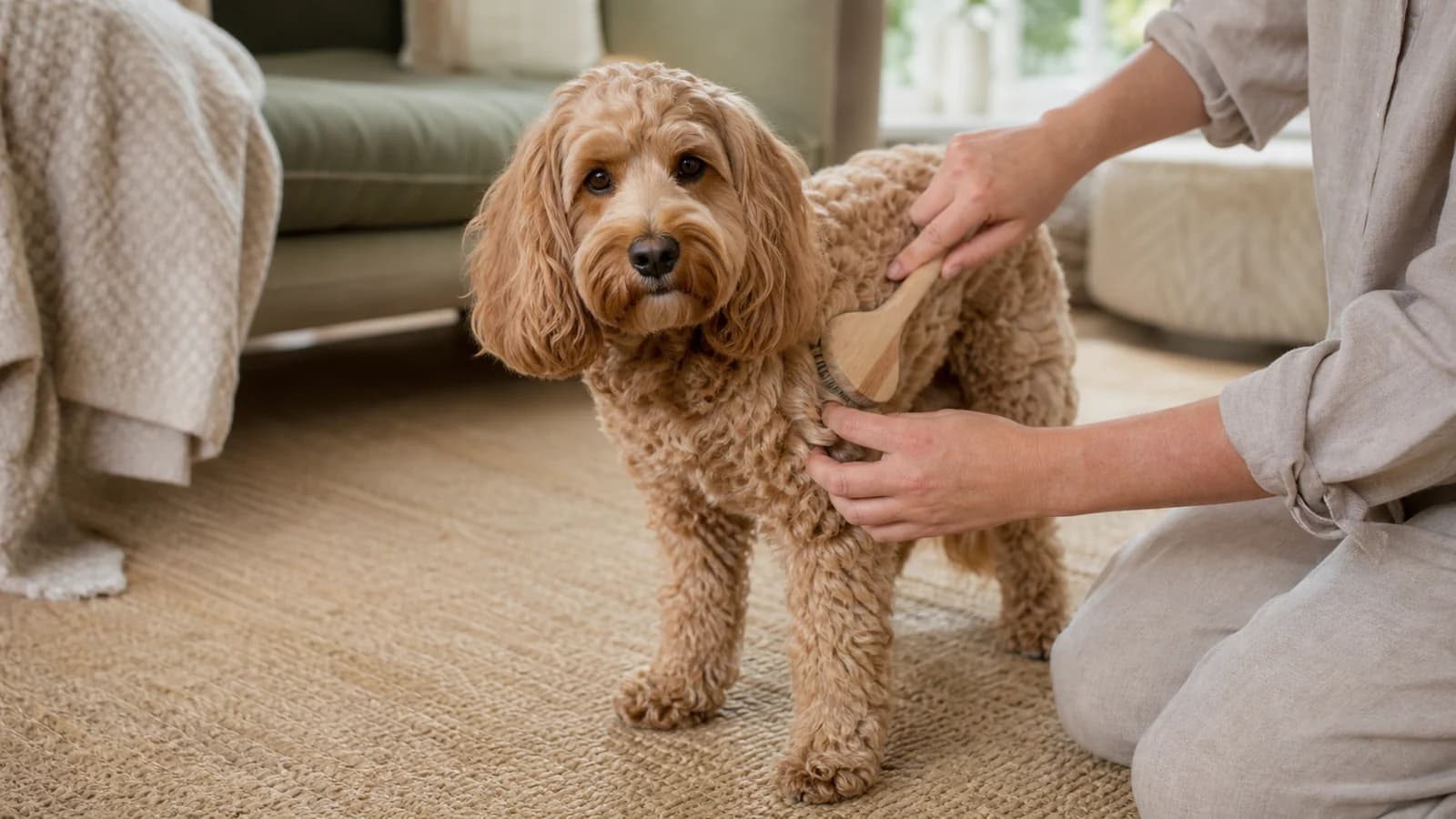
There is no single Cockapoo grooming schedule because coats range from loose waves to dense curls. PDSA advises brushing poodle-cross coats a few times a week because they can knot easily, especially when wet. The Floof Spa uses six to eight weeks as a practical professional-grooming starting guide, but coat length, brushing success, wet walks and tangling should set the actual interval.
Cockapoo grooming schedule at a glance
| When | Useful task | Adjust when… |
|---|---|---|
| A few times each week | Brush in small coat-level sections and use a suitable comb as a gentle check | The coat is long, dense, wet often or tangling faster |
| After wet or muddy walks | Rinse only if needed, dry through, then check friction areas | Harness, ears, legs or paws remain damp or collect debris |
| Around every 6–8 weeks as a starting guide | Discuss professional coat care and the chosen length | The comb stops passing comfortably or a shorter finish stays manageable longer |
| Whenever texture changes | Reassess tools, technique and frequency | A puppy coat becomes denser, curlier, softer or mixed in texture |
This is a decision framework, not a guarantee that every Cockapoo needs a Full Groom on the same date. A loose, shorter coat with effective home care may stay comfortable differently from a long, dense curl. Ask Joanne to review the interval after each appointment rather than booking by breed name alone.
Build the schedule around coat, not the word Cockapoo
Loose or wavy coats
A looser coat can still knot where hair rubs or stays damp. Brush to skin level in manageable sections without scraping the skin, then check behind the ears, under the collar or harness, armpits, legs and tail. Do not assume visible waves mean the undercoat is tangle-free.
Dense or curly coats
Tighter curl can hide small tangles and trap moisture close to the coat. Several-times-weekly care is a baseline, but some long or dense coats need more frequent checks. More brushing is not automatically better if technique pulls, scratches or makes the dog dread handling; ask the groomer for an in-person demonstration.
Long fluffy finish or practical shorter trim
Length changes workload. A longer finish usually requires more thorough home care and quicker action after wet walks. A shorter practical trim can reduce tangling and drying time, but it does not remove the need for brushing, paw checks or regular professional review. Choose a style you can maintain between visits, not only one that looks good on appointment day.
A realistic between-grooms routine
- Choose a calm, dry dog and a non-slip place; keep early sessions short.
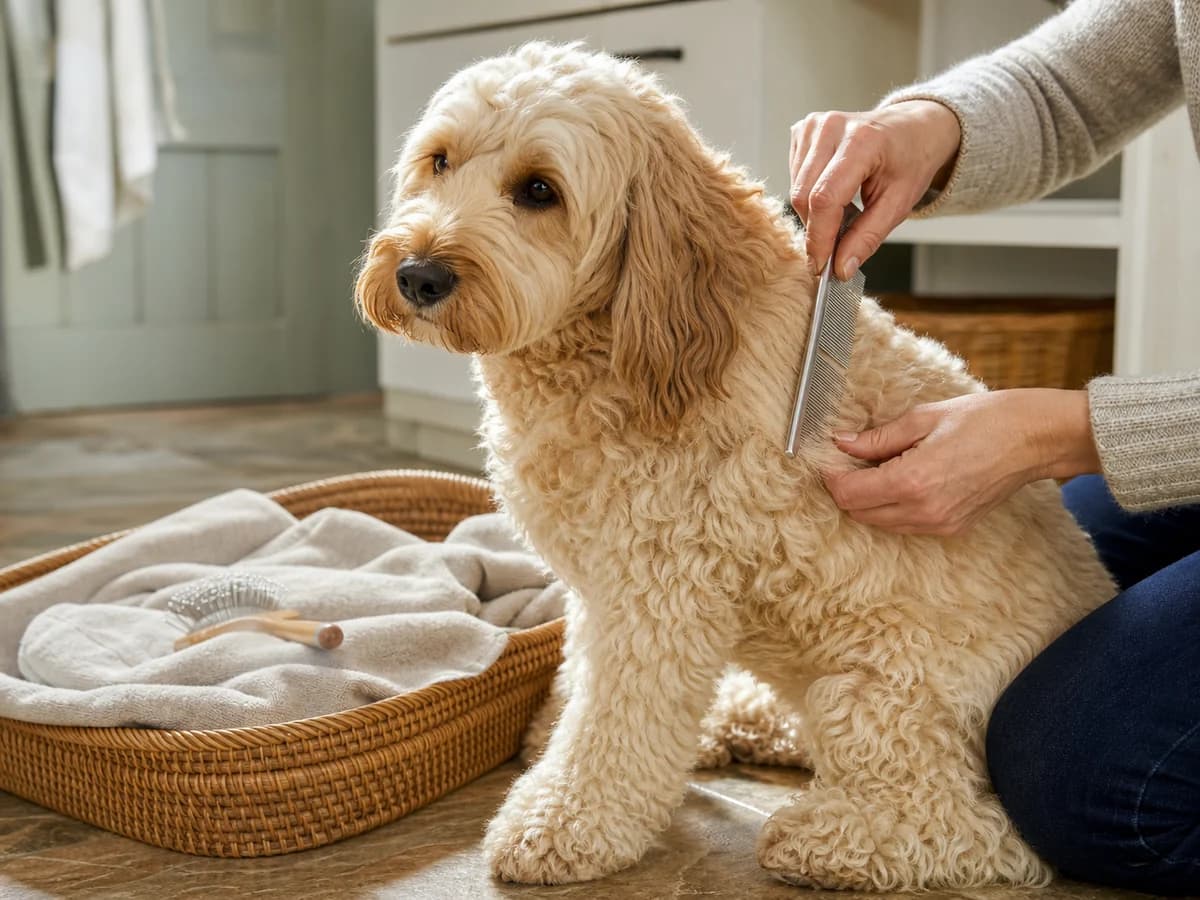
- Use a coat-appropriate brush in small sections so you reach through the coat rather than polishing the surface.
- Support hair above a small tangle and work gently from the ends; stop if skin pulls.
- Use a suitable comb lightly as a check, never as a tool for dragging through resistance.
- Inspect behind ears, collar and harness lines, armpits, chest, legs, paws, tail and hygiene areas.
- Finish before the dog becomes worried and note any area that needs professional help.
Technique matters as much as frequency. Follow the detailed between-grooms brushing guide and ask Joanne which brush and comb suit your dog's actual coat. A tool recommended for another Cockapoo may be too harsh or ineffective for yours.
Wet-weather and coastal care
Rain, mud and coastal walks around Herne Bay can make soft or curly hair tangle faster. After a wet outing, rinse with fresh lukewarm water when needed, towel gently and dry the coat thoroughly enough to prevent damp sections being left against the skin. Brush once the coat can be worked comfortably. Shampoo is not required after every damp walk; use dog-specific shampoo only when a wash is needed.
Pay particular attention beneath harness straps and around the legs, belly and ears. Do not repeatedly brush wet knots or apply human detangling products. Persistent redness, itching, odour or pain is a veterinary concern, not a cue to intensify grooming.
Puppy coat and adult coat change
A Cockapoo's coat may alter in density, texture or curl as the dog matures, but there is no reliable fixed age or identical change for every cross. When brushing suddenly takes longer, the comb catches in new areas or moisture takes longer to dry, reassess the routine. The same tools and six-to-eight-week starting point may no longer suit the coat.
Signs the professional interval needs changing
- The comb no longer passes comfortably through previously manageable areas.
- Small tangles repeatedly develop behind ears, under harnesses or in armpits.
- Home sessions become prolonged, frequent or stressful despite good technique.
- Hair obscures the eyes, paws or hygiene areas and cannot be maintained comfortably.
- The coat stays damp and dense after ordinary wet walks.
- A practical shorter trim remains easy to care for well beyond the current interval.
Move the appointment earlier before tangles become close mats, or discuss a more maintainable length. If the coat is already tight to the skin, do not attempt DIY scissors or force a comb through it; use the matted-fur guide. For a broader comparison across coat types, see how often dogs need grooming.
Choosing a Floof service
A Cockapoo Full Groom is the clearer choice when length or shape needs changing. The published breed-service guide starts from £40, with final price based on size, coat condition and work required. A standard Full Groom includes the wash, dry, brush-out, haircut and finishing work.
A Bath & Dry can maintain a brushable coat between cuts when no haircut is needed. It cannot replace a haircut indefinitely or undo tight matting. Send photos and explain your preferred length so Joanne can confirm the suitable service, guide price and interval.
Sources and safety
The PDSA grooming guide says poodle-cross coats are prone to knots, particularly when wet, and recommends brushing a few times weekly. The RSPCA groomer guide says groomers should demonstrate appropriate home tools and techniques and avoid forcing a distressed dog.