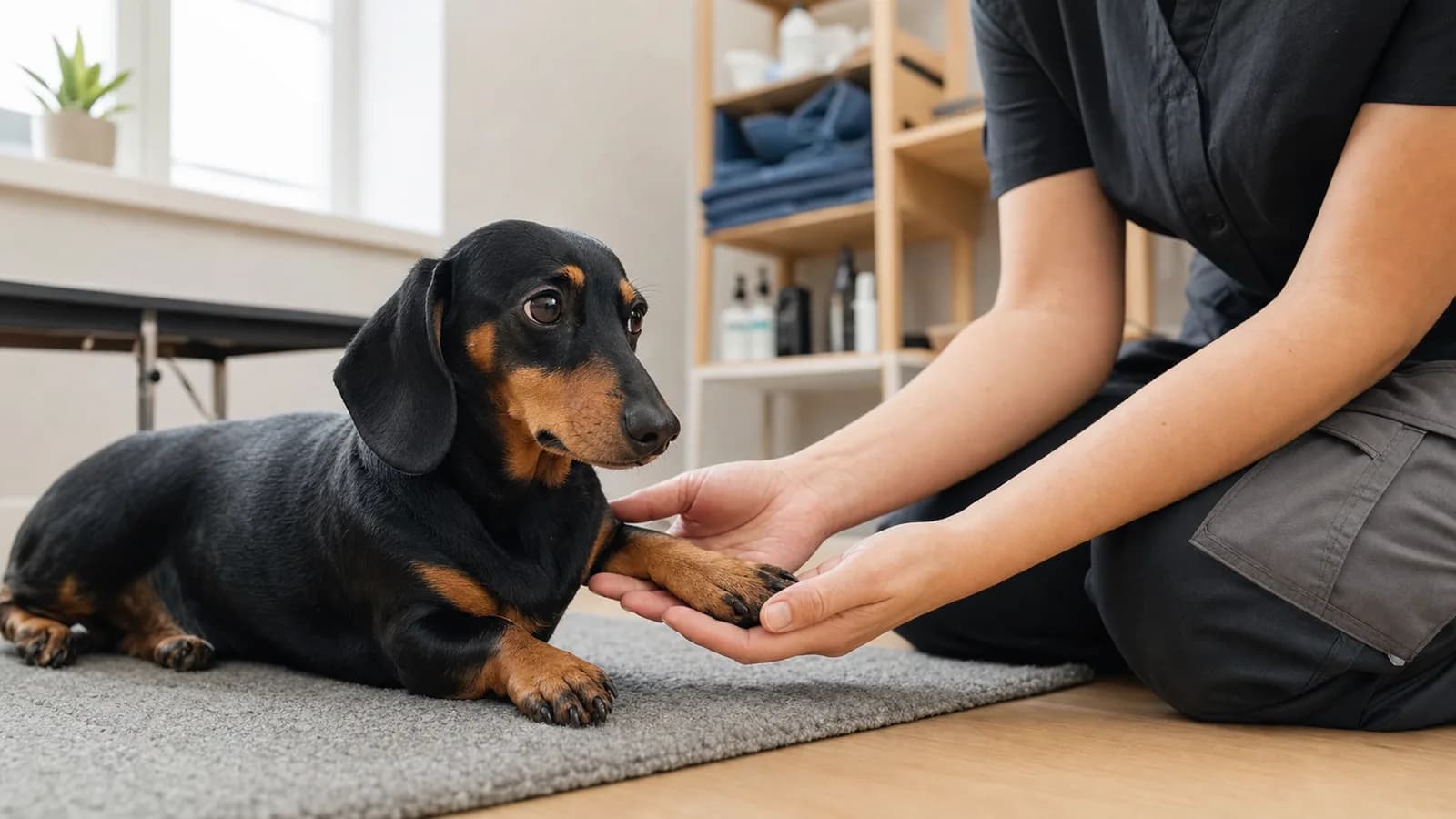
If your dog is scared of nail clipping, stop trying to complete every nail at once. Begin away from the clippers: reward calm paw proximity and brief touch, then introduce the tool and tiny steps over separate sessions. Do not pin, chase or punish the dog. If fear is severe, sudden, linked to pain or escalating towards a bite, ask your vet for advice.
Why nail clipping can feel frightening
Paws are sensitive, and nail care combines touch, holding, an unfamiliar tool, pressure and sound. A previous clip into the quick may contribute, as may soreness elsewhere in the paw or limb. These are possibilities, not diagnoses; do not assume every refusal is stubbornness or every fear comes from a bad groomer.
First decide: training issue or possible pain?
Pause home training and contact a vet if fear appeared suddenly or you notice limping, repeated licking, swelling, heat, bleeding, a torn or split nail, a nail curling into the pad, yelping, or an unusual aggressive response to touch. Pain can change behaviour, and clipping through it can make both the injury and fear worse.
A low-pressure nail-care ladder
Work only while your dog remains comfortable. Each step can take multiple short sessions, and moving backwards is sensible if body language changes. The aim is calm participation, not completing the ladder within a fixed number of days.
1. Relax around the setup
Choose a non-slip place where your dog already settles. Put closed dog nail clippers at a distance, reward calm observation, then put them away. Do not lure the dog close and suddenly grab a paw.
2. Start above the paw
Briefly touch a comfortable shoulder or upper leg, reward and release. Over separate repetitions, move lower only while the dog stays loose and willing. If your dog withdraws, respect that information.
3. Practise a brief paw touch
Touch, release and reward before the dog needs to pull away. Later, build towards supporting the paw for a moment. Avoid squeezing toes or trapping the limb.
4. Introduce the tool without cutting
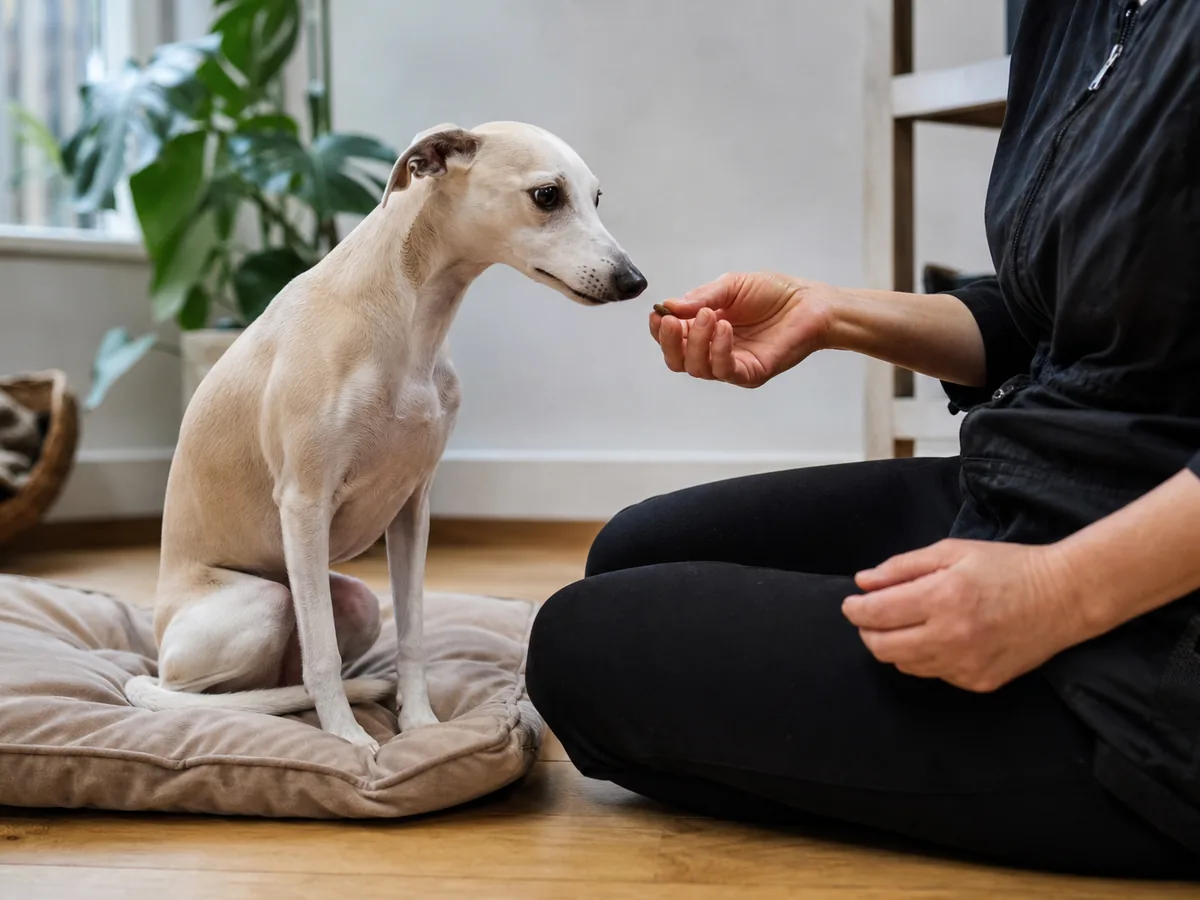
Show and move closed dog nail clippers at a comfortable distance. Let the dog hear a small clip sound away from the paw if that can be done without worry. Reward, finish and separate this from actual nail cutting.
5. Touch the tool to one nail
When paw handling and tool movement are comfortable, briefly touch the closed tool to one nail, then release and reward. Repeating a calm non-cutting step can be more useful than rushing ahead.
6. Take one tiny, safe amount
Only if you know how to identify a safe amount, remove a very small tip from one nail using dog nail clippers, reward and finish. You do not need to complete the paw. If you are unsure—especially with dark nails—ask your vet for a demonstration instead of guessing where the quick ends.
When to stop
Stop for increasing stillness, pulling away, tucked posture, repeated lip licking or yawning, growling, snapping or escape attempts. A growl communicates discomfort; punishing it may remove a warning without removing the fear. Read more about stress signs during grooming.
Home, groomer or vet?
| Situation | Appropriate next step |
|---|---|
| Dog is relaxed and you can identify a safe tiny tip | Short, optional home session with dog clippers |
| Routine nails, handling appears safe and history is disclosed | Ask a groomer whether nails can be included |
| Sudden fear, pain, injury or embedded nail | Vet first |
| Severe or repeated fear, growling or attempted biting | Vet assessment; behaviour referral may follow |
| Questions about calming medication or sedation | Vet only |
At The Floof Spa, nails are included in the Full Groom, Bath & Dry and De-shed packages. There is no published standalone nail service or price. The quiet one-to-one setup may suit some dogs, but it cannot guarantee that nails will be completed.
What to tell Joanne before booking
- Whether fear is longstanding or appeared suddenly.
- What happens when a paw, toe or clipper is approached.
- Any previous quick injury, torn nail, limping or pain.
- Whether one paw or body area is notably more sensitive.
- Growl, snap, bite or escape history and what helps the dog disengage safely.
Use the first-appointment disclosure checklist and ask about the anxious-dog grooming approach. A partial attempt or no clipping may be safer than forcing a complete result.
Sources
The PDSA nail-clipping guide explains dog clippers, the quick, stopping when stressed and asking a vet for help. Its canine body-language guide covers worried signals in context. The Royal Kennel Club grooming guide notes that nails touching the ground under weight may be overlong and that groomers or vets can help.