
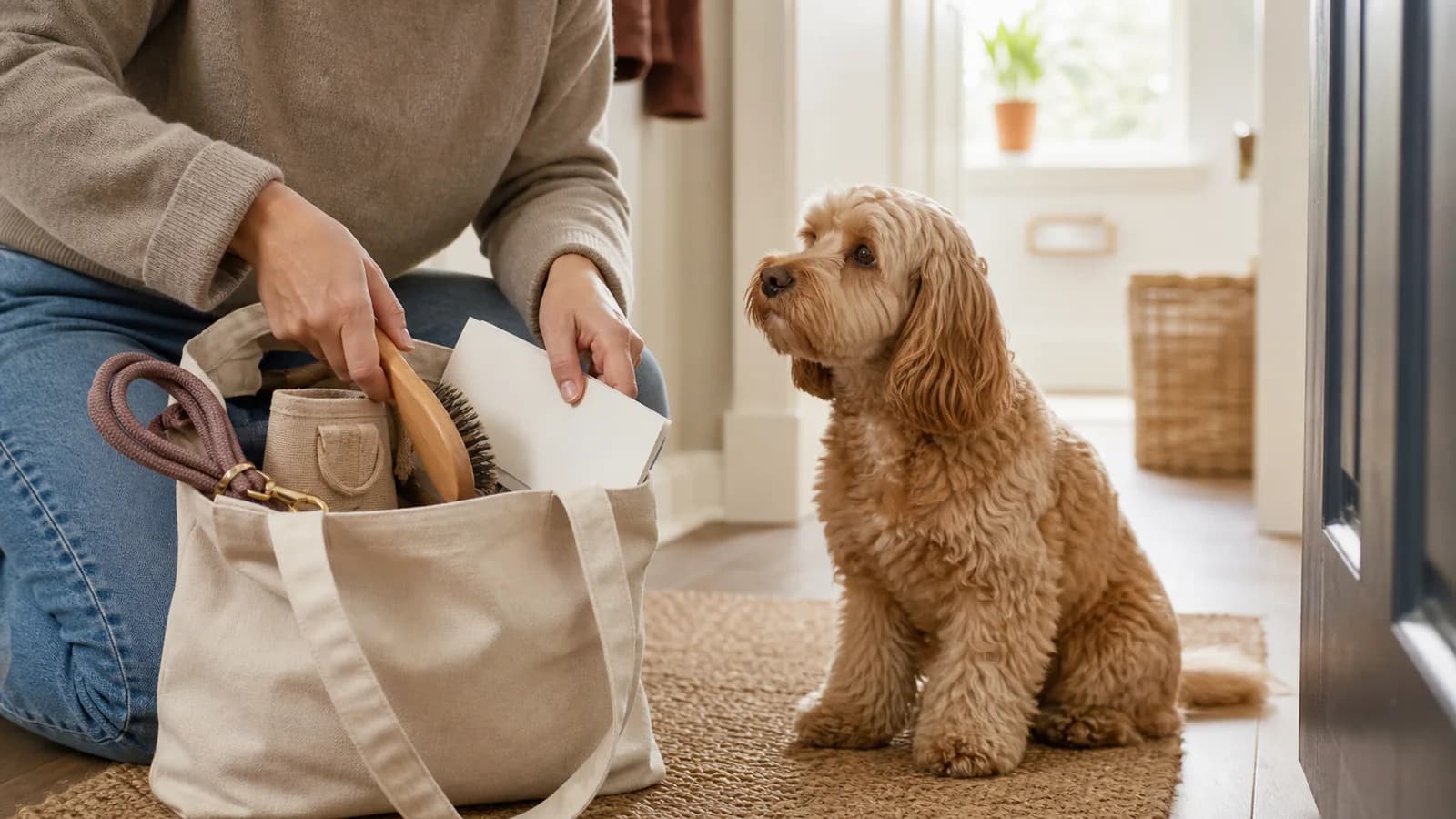
Before a first grooming appointment, share your dog's breed or coat type, size, age, current coat condition, last groom, preferred practical finish, medical and mobility needs, allergies or prescribed products, and any fear, bite or escape history. Explain specific triggers and what helps. Honest detail lets the groomer assess suitability; it should never be used to punish or label your dog.
The first-appointment information checklist
Identity and coat
- Breed or cross, age and approximate size or weight.
- Clear recent photos of the whole dog and any difficult area.
- When the last professional groom happened and what was done.
- Current home brushing, tools and any areas a comb cannot pass through.
- Known matting, compacted shedding coat, fleas or recent coat changes.
Coat labels are only a starting point. Dogs of the same breed can have different density, texture and condition. A current photo is more useful than a picture taken immediately after the last haircut.
Health and comfort
Share diagnosed conditions, pain or stiffness, mobility or standing limits, recent surgery or illness, skin and ear issues, allergies and prescribed products. Mention medication when it is relevant to safe handling, but do not change a dose or timing for grooming unless the prescribing vet directs it.
Behaviour and handling
Describe what actually happens around paws, face, ears, brushing, clippers and dryers. Useful detail sounds like “freezes when the front right paw is lifted” or “turns and snaps when the dryer approaches”, not simply “nervous” or “naughty”. Include growling, snapping, biting and escape attempts even if nobody was injured.
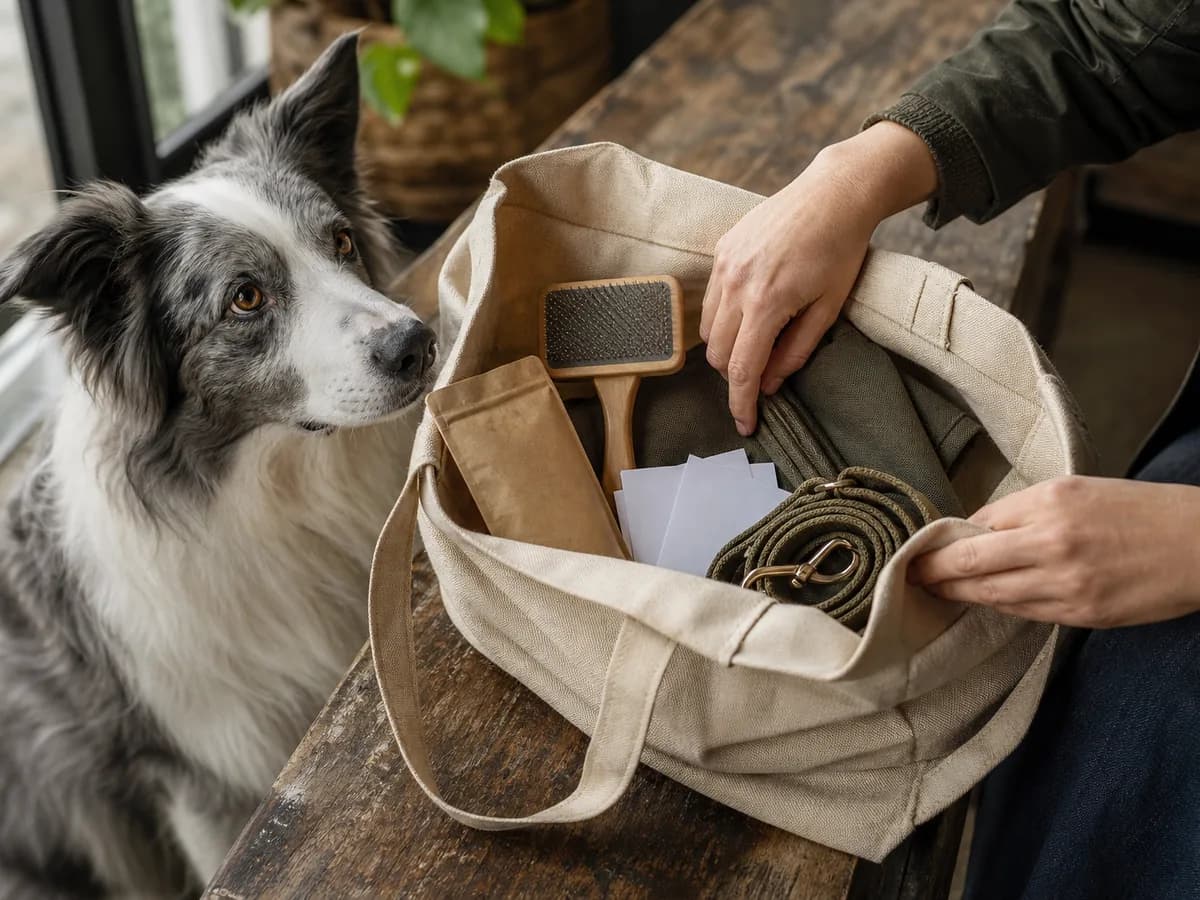
Stillness, turning away, repeated lip licking or yawning, hiding and tense posture can indicate worry in context. The PDSA body-language guide can help you describe what you have seen without trying to diagnose the cause.
The finish you want
Bring one or two reference images and explain what matters: easy drying after beach walks, less harness friction, a clear field of vision or retaining a particular shape. A photo is inspiration, not a guarantee. Coat type, matting and comfort determine the achievable finish.
Practical arrangements
- A working contact number for updates and collection.
- Preferred appointment times and any firm collection constraint.
- Whether you hope to stay during a first visit, discussed before arrival.
- Your postcode if asking about the £5 local collection option.
- Anything needed for a secure, calm handover, including escape risk.
Owner presence is agreed case by case, so read whether you can stay during grooming rather than assuming. Collection also requires individual postcode and timing confirmation.
Details people are often embarrassed to mention
Matting, fleas, snapping and a previously unfinished groom are important planning facts, not moral failures. Withholding them can put your dog, groomer and other people at risk or leave too little time for an appropriate plan. State what is known, what happened and what remains uncertain.
If your dog has grooming fear, Joanne can discuss the one-to-one anxious-dog service. This setup may suit some dogs, but it does not guarantee every stage can be completed.
What your groomer should confirm back
- Which service appears suitable and any information still needed.
- A realistic coat goal and what could require that goal to change.
- The guide price and how the final price is confirmed before the appointment.
- An approximate duration and how you will be told the dog is ready.
- Whether owner presence or collection has been agreed.
- What will happen if the dog cannot safely finish.
At The Floof Spa, Joanne personally confirms service, availability and price before booking. The Herne Bay studio works one dog at a time. Learn more about Joanne and the studio, see the local grooming service and check realistic appointment timings.
Copy-and-paste WhatsApp template
Sources and safety
The RSPCA grooming guide recommends discussing sensitive skin, disliked body areas, anxiety and physical or behavioural needs. The PDSA grooming guide covers coat-specific care, slow positive handling and veterinary advice for skin or coat changes.