
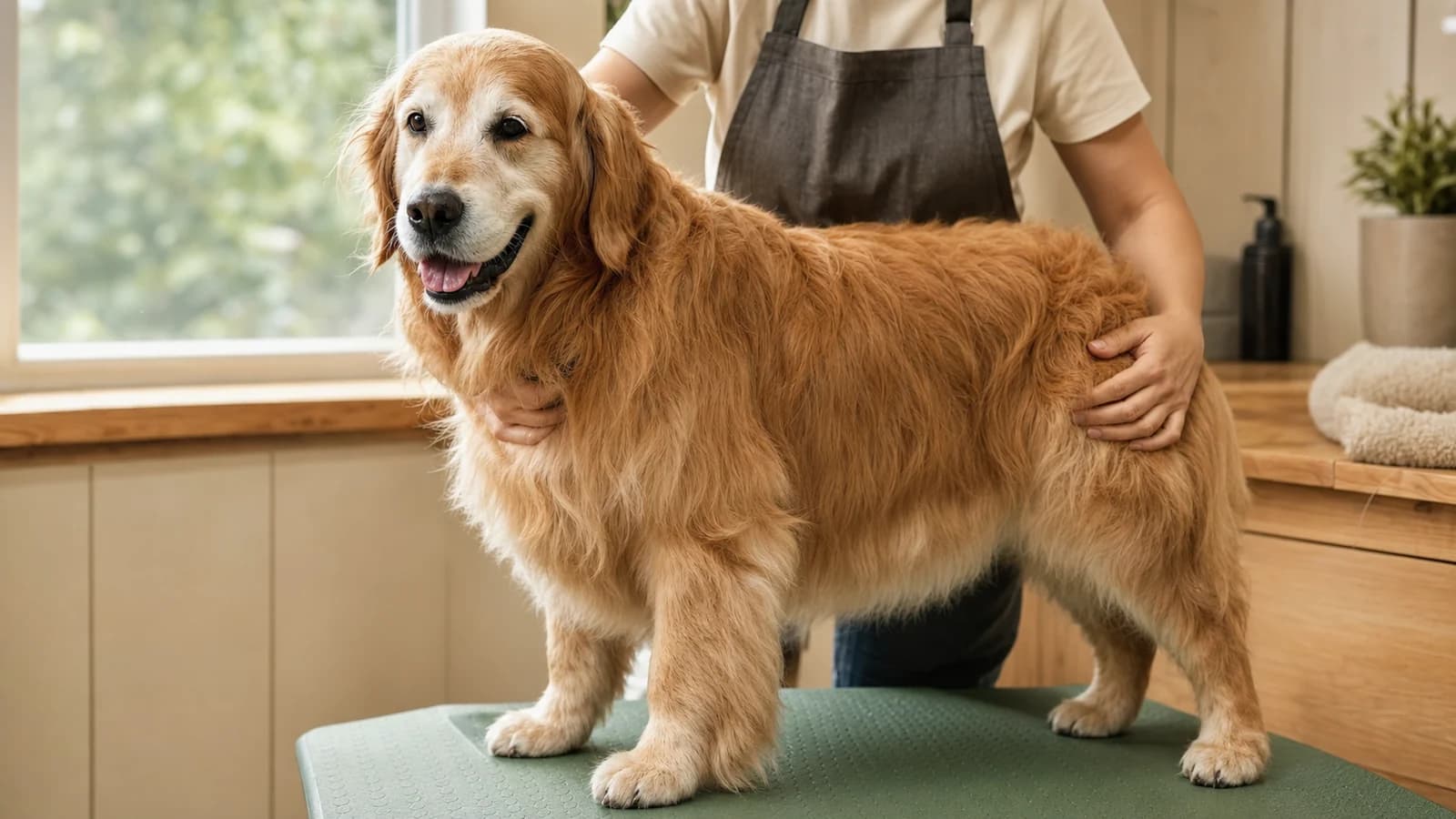
A calm senior-dog grooming appointment starts before arrival. Tell the groomer about diagnosed conditions, pain or stiffness, hearing or sight loss, breathing or heart concerns, relevant medication and how long your dog can comfortably stand. Agree a practical coat goal, likely breaks and a clear stop plan. New pain, weakness, confusion or breathlessness needs veterinary assessment before routine grooming.
What changes when an older dog is groomed?
Age does not make a dog automatically unsuitable for grooming, and there is no birthday after which appointments must stop. What matters is the individual dog's health and comfort on that day. Lower stamina, less secure balance, reduced joint movement or changes in hearing and vision can affect how they cope with standing, turning, equipment noise and unfamiliar touch.
These are planning considerations, not diagnoses. Stiffness, confusion, panting or reluctance to be handled should not simply be dismissed as normal ageing. A vet should assess anything new, worsening or painful. Once known needs are understood, grooming can focus on hygiene and manageable coat care rather than a demanding cosmetic result.
The pre-appointment senior checklist
Health, pain and medication
Share diagnosed conditions, recent illness or surgery, painful areas and any medication relevant to safe handling. Say whether symptoms are stable and whether your vet has given instructions. Do not change, delay or add medication for a grooming visit unless your vet directs it; a groomer cannot prescribe or judge a medical dose.
Mobility, lifting and standing tolerance
Explain whether your dog slips, struggles with steps, resists being lifted or needs support when changing position. Give a realistic idea of comfortable standing time at home. Mention where touch is difficult, including hips, knees, spine and paws. This helps Joanne plan positioning and decide whether the requested finish is proportionate.
Hearing, sight and preferred approach
A dog with reduced hearing may be startled by touch they did not anticipate; a dog with reduced sight may need more time to orientate. Tell the groomer which side is easier to approach from, whether verbal cues still help and what normally prevents surprise. Familiar information is more useful than assuming every older dog wants the same handling.
Toileting, water and breaks
Mention increased toileting needs, continence changes, thirst or a tendency to become tired quickly. Agree that comfort breaks can happen without treating them as a setback. If increased thirst, urination or accidents are new, discuss them with your vet rather than relying on appointment adaptations alone.
Coat condition and the practical goal
Send a recent full-coat photo and point out tangles, thin skin, lumps already assessed by your vet or areas your dog protects. A simpler finish may reduce handling, but a universally short senior haircut is not the answer. Coat type, weather, home care and comfort all matter. Joanne can help choose between the dedicated senior grooming service, a Bath & Dry or another suitable plan.
How can a senior groom be adapted?
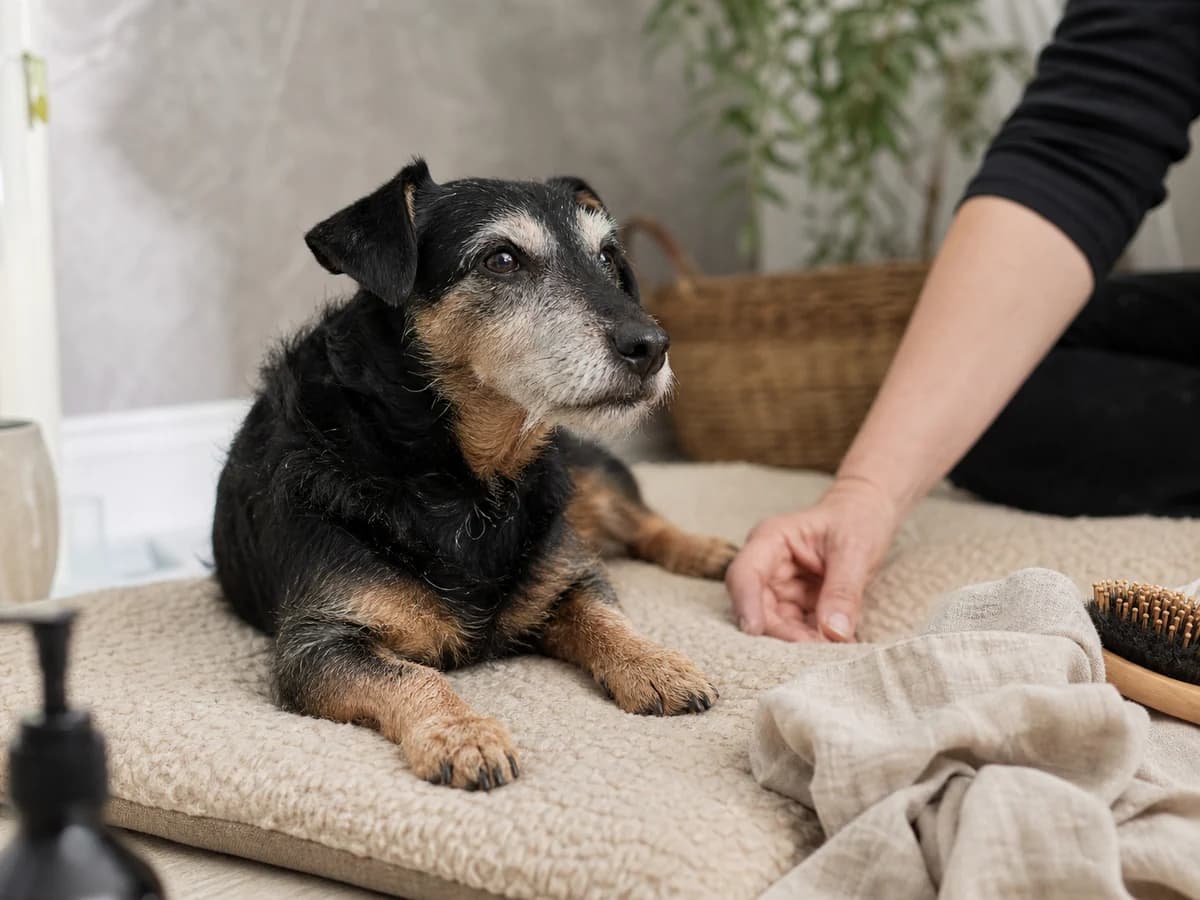
- Choose a simpler, comfort-led coat goal where prolonged styling would add unnecessary standing or handling.
- Use careful positioning and change position rather than expecting one long uninterrupted stand.
- Allow quiet pauses based on the dog's body language and stamina, without promising a fixed number or length of breaks.
- Adjust drying and face or paw work to what the individual dog comfortably tolerates.
- Prioritise hygiene and essential coat welfare if completing every cosmetic detail would be too tiring.
- Stop when continuing is no longer safe or kind, then give the owner a clear handover.
Adaptation does not always mean a shorter visit: breaks and slower repositioning can extend elapsed time even when less coat work is attempted. Read how long dog grooming takes and ask for an individual collection window rather than planning around a stopwatch.
Preparing on the day
- Keep the normal feeding and medication routine unless your vet has told you otherwise.
- Offer an appropriate toilet break before arrival, but avoid an unusually long or exhausting walk.
- Bring only items or products agreed with Joanne or directed by your vet.
- Keep the handover quiet and concise, while clearly flagging any change since booking.
- Confirm beforehand whether you hope to stay and how collection will work; do not make that decision during a difficult handover.
Use the first-appointment information checklist so important details are not lost. If travel is difficult, local collection and drop-off costs £5 only where practical and confirmed for the postcode. Collection is not automatically calmer for every senior dog, so explain how your dog travels before assuming it is the best option.
The Floof Spa setup for older dogs
The Herne Bay studio works with one dog at a time, with no salon queue or crates, and breaks can be used as needed. That quieter setup may suit an older dog affected by noise or other dogs, but it cannot remove pain or guarantee that a groom will be completed. The approach can also be considered alongside anxious dog grooming where worry is part of the picture.
When should grooming stop and the vet come first?
Contact your vet before grooming for new lameness or pain, collapse, laboured breathing, marked weakness or confusion, open or inflamed skin, or sudden aggression when touched. During an appointment, unexpected breathing difficulty, inability to stand comfortably, significant distress or apparent pain should end the grooming plan. Finishing the haircut is never more important than assessment and recovery.
Sources and safety
The Royal Kennel Club's senior-dog guidance discusses age-related hearing, vision, anxiety and stiffness and advises veterinary checks for discomfort or lameness. PDSA grooming guidance recommends slow, positive grooming, stopping when a pet is worried and paying attention to nail care where mobility is reduced.