Do not shave a healthy double coat at home as a routine fix for heat or shedding. Coat-appropriate brushing, loose-undercoat removal and professional assessment are usually better starting points. However, ‘never shave a double-coated dog’ is too absolute: severe matting, surgical access, skin treatment or an individual welfare need can make close clipping appropriate within a groomer's or vet's plan. Skin exposure and regrowth can vary.
What is a double coat?
A double coat has an outer layer of guard hairs and a softer undercoat. The relative length, density and texture differ between dogs. A Labrador's coat, for example, is described by the Royal Kennel Club breed standard as short, dense and weather-resistant with good undercoat; other double coats can be longer or more plush.
Breed name can be a clue, not a complete coat assessment. Crosses and individual dogs vary, and a coat altered by health, age or previous clipping may not match a simple online diagram. Let a knowledgeable groomer inspect it before choosing a tool or haircut.
Why routine shaving is usually not the first choice
It does not switch off shedding
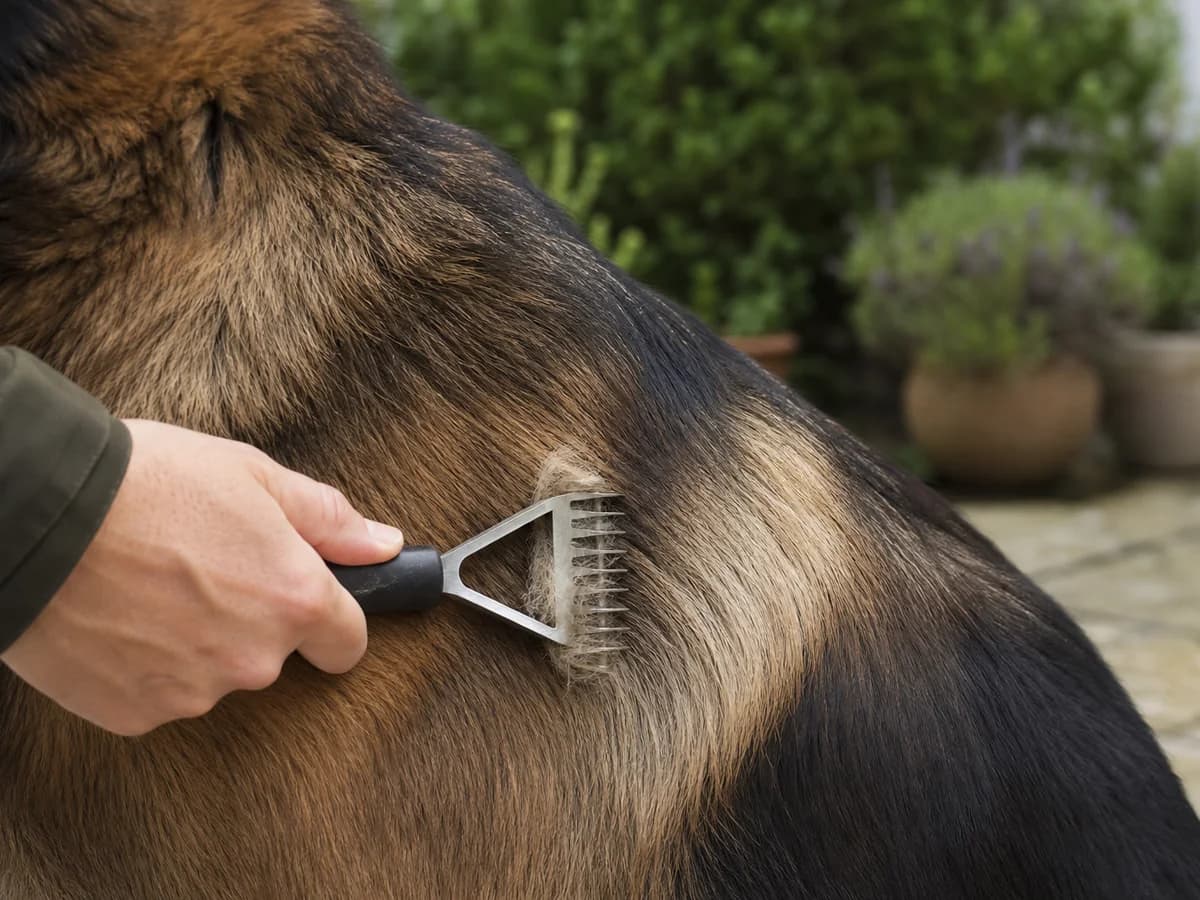
Clipping cuts hairs that are present; it does not stop follicles producing and releasing coat. Shorter shed hair may be less visible for a while, but the normal cycle continues. If loose undercoat is the issue, suitable brushing and undercoat removal target that need more directly.
It leaves less hair between skin and the environment
Taking the coat very close increases exposure of the skin. Sun protection and aftercare therefore matter if clipping is necessary. Avoid simplistic claims that a coat works exactly like building insulation in every condition; the practical point is that removing it changes the dog's normal covering and should have a clear reason.
Regrowth is not completely predictable
Many coats regrow, but timing and texture can vary. VCA veterinary guidance notes that delayed regrowth or post-clipping alopecia is rare but recognised, particularly in some plush-coated breeds. Nobody should guarantee that an individual coat will look exactly the same by a fixed date.
When close clipping may be justified
Severe matting that cannot be removed comfortably
When dense matting is tight to the skin, prolonged brushing may be painful and unsafe. A close practical clip can prioritise comfort even though preserving length would look preferable. Do not use scissors beneath mats at home; read what matted fur means and what to do and arrange professional assessment.
Veterinary access or skin treatment
A vet may need an area clipped for surgery, imaging, wound management or treatment. That is a medical decision, not a cosmetic grooming rule. Follow the veterinary team's instructions on how much coat must be removed and how to protect or monitor the exposed skin.
An individual welfare plan
A dog's coat condition, mobility, ability to tolerate maintenance or wider health needs can create an exception. Discuss the aim, alternatives and likely aftercare with the groomer and vet as appropriate. The right answer for one dog does not become a recommendation for every healthy double coat.
Better starting points for shedding and summer comfort
- Use a coat-appropriate brush or rake with pressure demonstrated by a groomer.
- Remove loose undercoat in brief sessions rather than scraping repeatedly at the same skin.
- Bathe only when needed, then rinse and dry the dense coat thoroughly and comfortably.
- Provide shade and water, avoid strenuous activity in hot conditions and follow veterinary warm-weather advice.
- Treat grooming as coat maintenance, not as prevention or treatment for heatstroke.
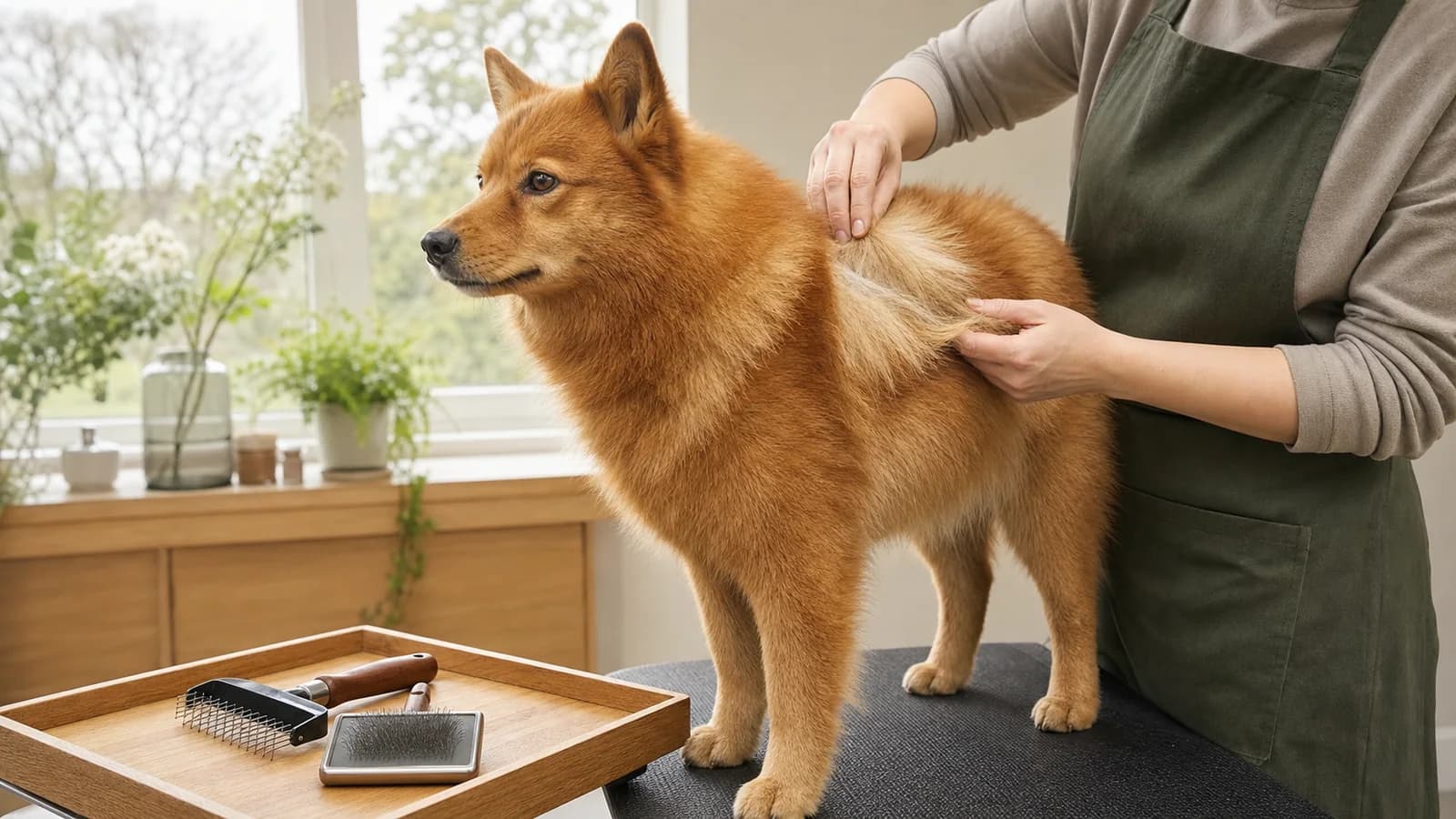
A professional De-shed service combines washing, blow drying and undercoat removal without deliberately shaving away the guard coat. The de-shedding guide explains the process. It reduces loose coat present at that appointment; it does not end future shedding.
For Labradors, see the dedicated Labrador de-shedding service and seasonal shedding calendar. The broader guide to short-haired dog grooming explains why short does not necessarily mean low-shedding.
Questions to ask before agreeing to clipping
- What coat layers and current condition can the groomer identify?
- Is the aim to manage shedding, matting, heat, hygiene or a veterinary instruction?
- What non-clipping options are realistic and comfortable?
- How close would the clip be, and why is that length proposed?
- How should exposed skin be protected and monitored afterwards?
- Is regrowth uncertainty relevant to this coat, and should a vet guide the decision?
The Floof Spa's coat-care option
The Floof Spa's De-shed includes a wash, blow dry, suitable undercoat removal, light face, paw and hygiene trimming, nails, routine ear and eye cleaning, conditioner and finish. Published guide prices start at £45 by size band. Suitability, finish and final price are confirmed individually; the service is not a promise to stop shedding or an automatic substitute for necessary medical clipping.
Sources and medical boundary
The Royal Kennel Club's grooming overview and PDSA's coat-care guidance support coat-specific tools and extra care during seasonal moulting. VCA's veterinary coat-care guidance provides the conditional clipping and regrowth context.