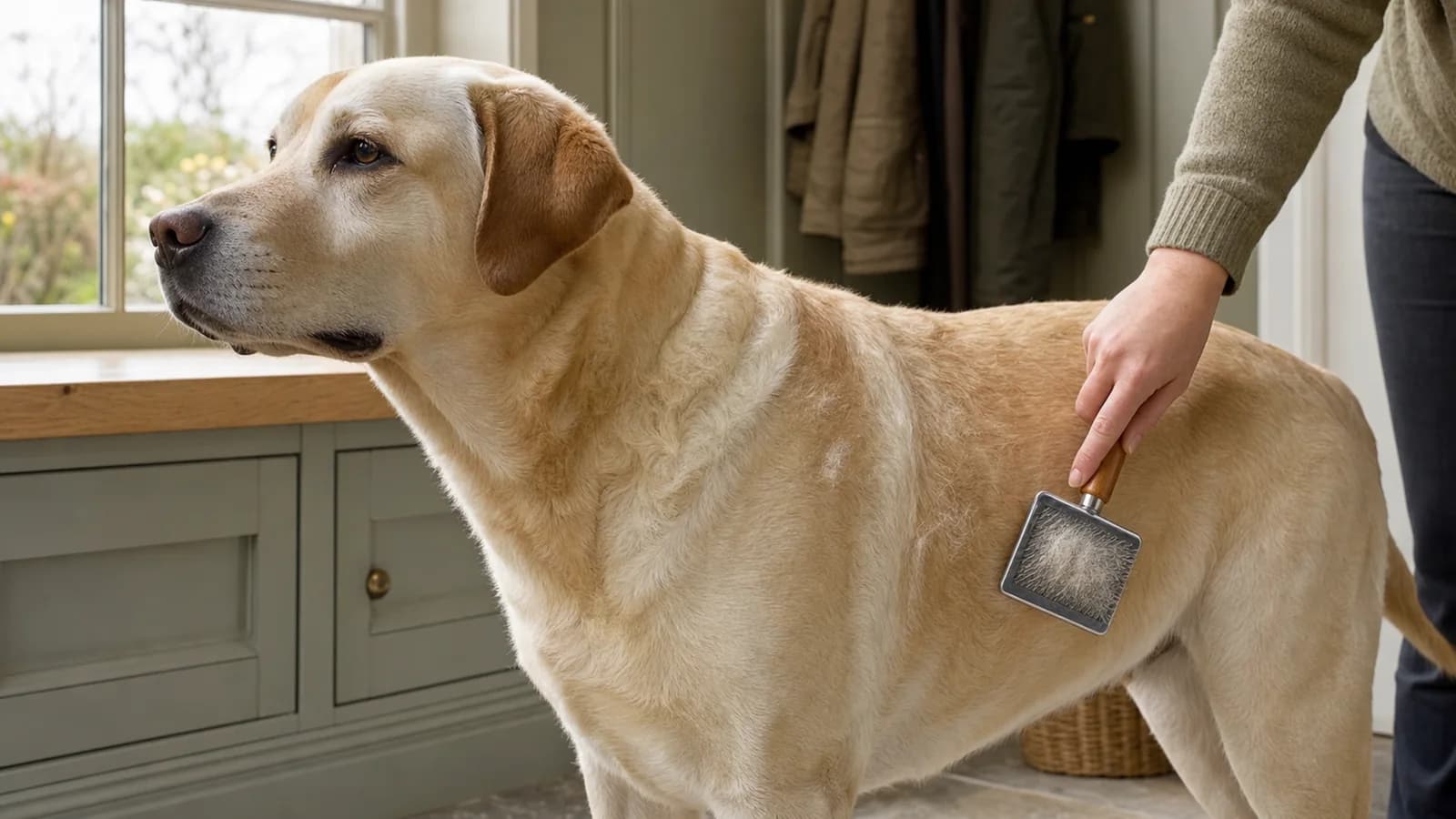
Labradors shed all year and many release more undercoat as their coat changes in spring and autumn. A weekly brush is a sensible normal baseline, with extra gentle brushing during heavier moulting. The pattern is not a diary with fixed start dates: daylight, indoor heating, weather, swimming, health and the individual dog's coat all influence what ends up on your clothes and floor.
The UK Labrador shedding calendar
Use the seasons below as prompts to inspect and adapt, not as a promise that every Labrador will follow the same cycle. A short, dense topcoat can hide a surprising amount of soft loose undercoat, so look at what the brush lifts and how the skin appears rather than judging only by hair around the home.
Winter: steady maintenance
Many Labradors still shed through winter. Indoor heating and time spent inside may make the change less distinct than owners expect. Keep the usual weekly coat check, remove surface dirt after wet walks and dry dense areas properly. Increase brushing only if the tool is collecting more loose coat; repeated aggressive passes can irritate healthy skin.
Spring: look for a heavier undercoat release
Spring is a common period for increased moulting as the coat responds to changing conditions. You may notice tufts lifting around the neck, shoulders, flanks and hindquarters or a fuller brush after each section. Short, comfortable sessions on separate days are better than trying to strip every loose hair in one marathon.
Summer: ongoing hair, swimming and drying
Shedding does not necessarily stop once summer arrives. Keep up the weekly check and rinse salt or dirt when needed rather than shampooing automatically. After sea swims, fresh-water rinsing and thorough drying matter; the separate coastal dog coat-care guide explains the full routine.
Autumn: another common coat-change period
Many dogs moult more again during autumn, although the timing and intensity vary. Adjust brushing to what is actually coming free without force. A Labrador that had a dramatic spring shed may have a quieter autumn, and another may appear to release hair gradually for weeks.
Weekly baseline versus heavy-shed weeks
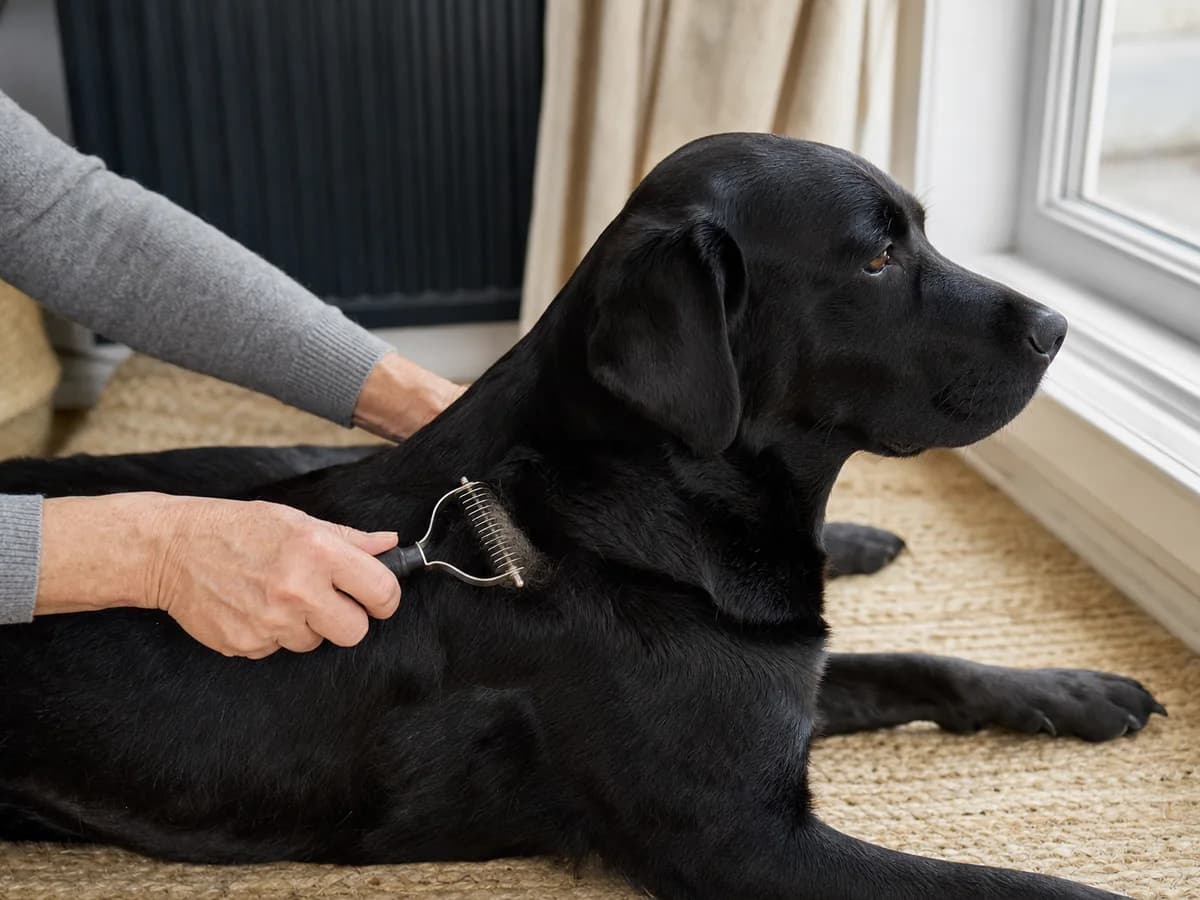
PDSA's Labrador guidance gives weekly brushing as normal baseline care. During a heavier shed, add one or more brief sessions if the skin remains comfortable and loose coat is lifting easily. Work with the direction of growth, use light pressure and pause if your dog turns away, becomes tense or repeatedly tries to leave.
The correct tool depends on the coat in front of you. The Royal Kennel Club notes that short-coated heavy shedders such as Labradors may benefit from a shedding rake for dead undercoat. That does not mean every rake, blade or forceful technique is suitable. Ask a groomer to demonstrate the tool, angle and pressure on your dog.
What actually helps with Labrador shedding
- Regular, gentle brushing that removes hair already ready to release.
- A coat-appropriate wash when the dog is dirty, followed by complete, comfortable drying.
- Professional undercoat removal when the volume or density is difficult to manage safely at home.
- A realistic expectation: normal hair growth and shedding continue after any grooming service.
A professional Labrador de-shed or broader dog de-shedding service may help lift loose undercoat. Read the de-shedding grooming guide for the process and limitations. It cannot permanently stop shedding or guarantee a hair-free home.
What not to use as a shedding shortcut
Do not shave a healthy Labrador coat as a routine answer to moulting. Shortening the coat does not switch off the hair cycle, and close clipping increases skin exposure. There are individual welfare and medical exceptions, so read the nuanced guide to shaving a double-coated dog and involve a vet when clipping is requested for treatment or a health problem.
Avoid over-bathing, human shampoo and aggressive high-force tools at home. More grooming is not automatically better: soreness, dandruff or broken hair after repeated work means the routine needs to stop and be reassessed.
Seasonal shedding or a reason to call the vet?
Gradual, fairly even release of loose hair with comfortable, normal-looking skin may fit ordinary shedding. Bald patches, sores, strong odour, greasy or unusually dull coat, persistent scratching, marked dandruff or a sudden large change do not belong on a calendar. Ask a vet, particularly when coat change appears alongside weight, appetite, energy or behaviour changes.
Bath & Dry or De-shed at The Floof Spa?
A Bath & Dry can suit a Labrador that needs cleaning, drying and a standard brush-out. De-shed adds more focused undercoat removal and starts from a £45 guide price by published size band. Joanne confirms suitability and the final price from the dog's size and coat condition; there is no fixed seasonal interval that every Labrador must follow.
Sources and coat safety
The calendar uses PDSA Labrador care guidance, PDSA's general grooming advice and the Royal Kennel Club's coat and tool overview. The Labrador standard describes a short, dense, weather-resistant coat with undercoat.