Yes. Short-haired dogs still benefit from brushing, coat and skin checks, nail monitoring, routine outer ear and eye care, and an occasional bath when dirty. Most do not need regular haircuts. A smooth, low-undercoat coat and a short, dense double coat can look equally ‘short’ while needing different tools and amounts of loose-hair removal.
What grooming means when there is not much hair
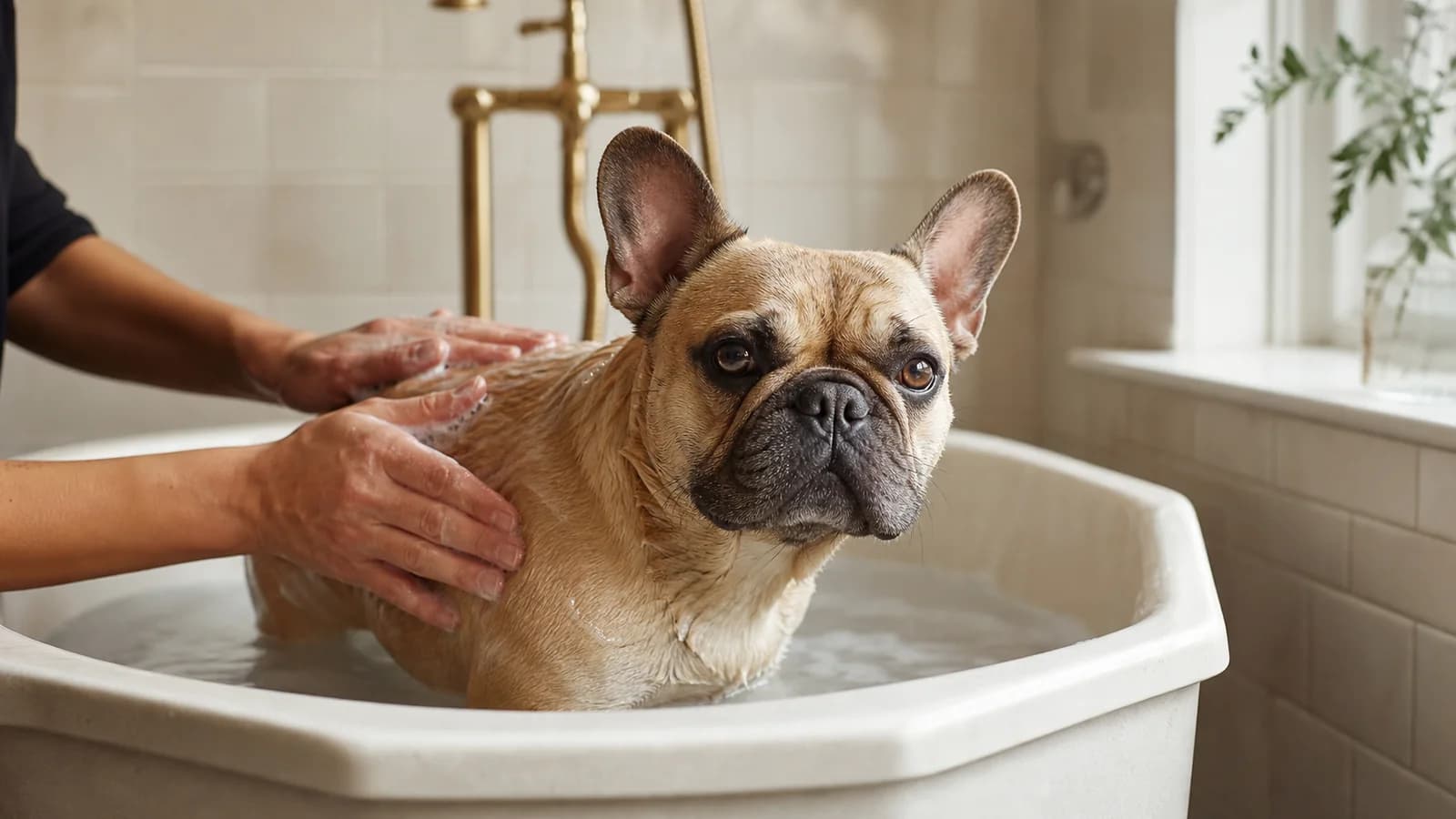
Grooming is broader than clipping. A gentle brush lifts dirt and loose hair and gives you a regular opportunity to notice changes in the skin. Nail length, visible debris around the outer ear or eyes, paw condition and comfort with handling still matter. Bathing cleans the coat when a rinse or brush is not enough; drying matters even when the hair lies close to the body.
Home checks are not a diagnosis. A groomer may notice a lump, sore area or unusual coat change and ask you to seek veterinary advice, but grooming does not treat allergies, infection, parasites or pain.
Short coat does not describe one coat type
Smooth coats with relatively little undercoat
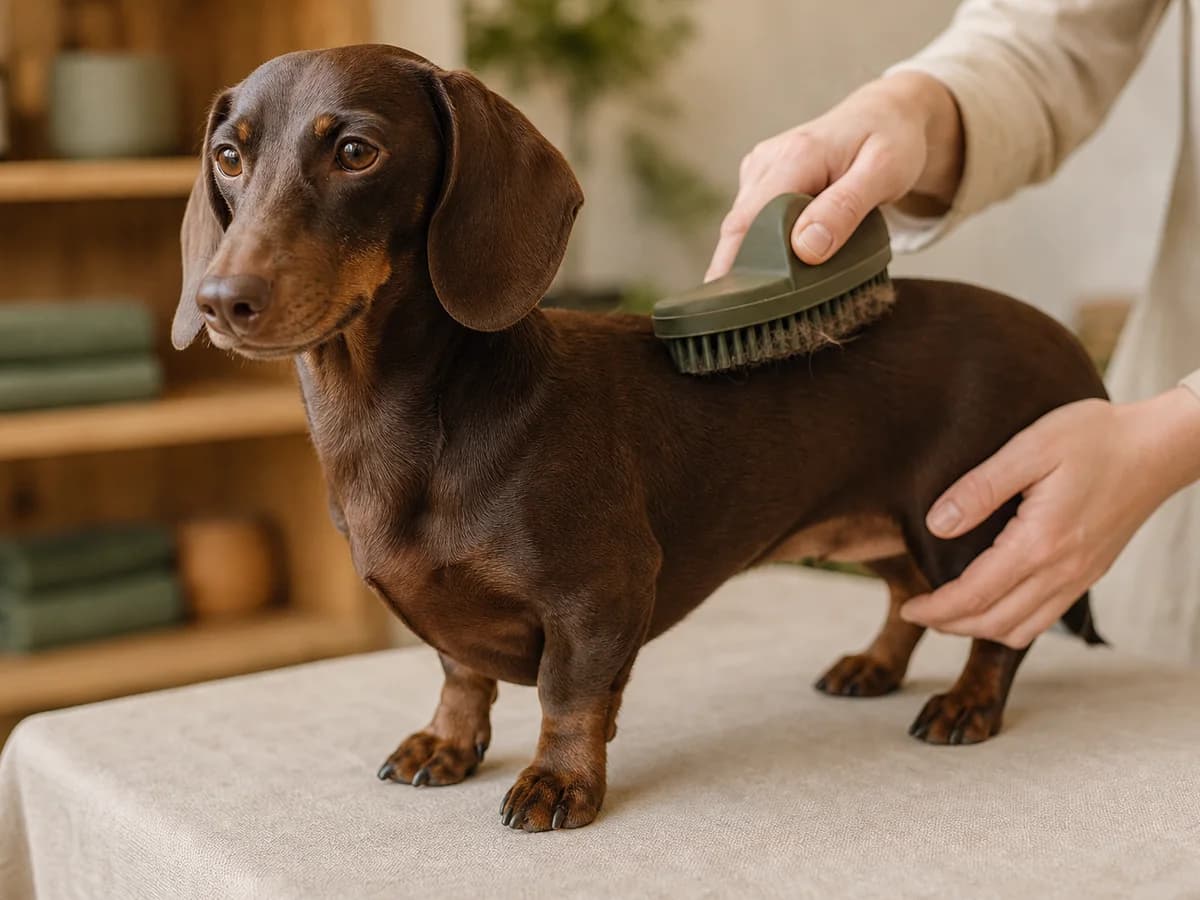
A soft brush or grooming mitt may be enough to remove surface hair and dirt from many smooth coats. Use light pressure: with little hair between tool and skin, vigorous brushing can scratch or irritate. The dog's actual coat, skin and response matter more than choosing a tool from a breed label alone.
Short, dense coats with shedding undercoat
Labradors are a familiar example of a short, dense coat with undercoat. They can release substantial loose hair despite never looking fluffy. These dogs may benefit from a groomer-approved rake or shedding tool during heavier periods. The Labrador shedding calendar explains how to adjust care without pretending every seasonal change starts on the same date.
Individual skin or medical needs
Some dogs need a veterinary bathing or clipping plan because of a diagnosed condition. Follow that plan rather than generic internet advice. Do not start medicated shampoo, increase bathing or clip a sore area because another dog with a similar-looking coat benefited.
How often should a short-haired dog be brushed?
PDSA suggests weekly brushing for short-haired breeds including Staffies and Labradors. The Royal Kennel Club notes that some light-grooming short coats may suit two or three light sessions a week, while short heavy shedders can need a different tool. These are starting ranges, not targets to meet when no loose coat is present.
Choose frequency from the amount of loose hair, the dog's lifestyle and whether the skin stays comfortable. A dog who rolls in dry grass may need a quick check after a walk without needing a complete grooming session. For technique and stop points, use the between-grooms brushing tutorial.
Does a short-haired dog need a haircut?
Usually not. Routine clipping does not prevent future shedding, and taking hair shorter can expose skin without solving the underlying hair cycle. Individual trimming may occasionally be agreed for hygiene, surgery, treatment, severe coat problems or another welfare reason, but that is different from booking regular styling for a healthy short coat.
If heat is the concern, ask a groomer or vet to identify the coat and discuss appropriate maintenance. Hair removal is not a substitute for shade, water, avoiding strenuous activity in hot conditions and following established warm-weather safety advice.
Bath & Dry, De-shed or Full Groom?
| Main need | Likely starting point |
|---|---|
| Dirty coat; no haircut needed | Bath & Dry |
| Heavy loose undercoat | De-shed, if suitable |
| Routine haircut for a healthy short coat | Usually unnecessary |
| Sores, baldness, pain or persistent itch | Vet first |
The Floof Spa's Bath & Dry starts at a £25 guide price by size and covers washing, blow drying, brush-out, nails and routine ear and eye cleaning. A De-shed starts at £45 and adds focused undercoat removal for suitable coats. Compare the packages in Bath & Dry versus Full Groom.
For a Labrador specifically, the dedicated Labrador de-shedding service explains the local appointment. Guide prices are not automatic quotes; Joanne confirms the service and final price from size, coat condition and work required.
Bathing a short-haired dog without overdoing it
Bathe when the dog is dirty or the coat needs it, not simply because another week has passed. Use dog-specific shampoo and rinse thoroughly. Frequent shampooing can be unnecessary unless a vet has prescribed a treatment routine. Tell the groomer about diagnosed sensitivities or previous product reactions before an appointment.
When the coat needs a vet, not extra grooming
Bald patches, broken or inflamed skin, a strong smell, repeated scratching, pain on touch, a suddenly greasy or dull coat, or a large unexplained increase in hair loss need veterinary advice. Do not assume a short coat makes dandruff, bumps or shedding harmless; they are often easier to see, not automatically less important.
Sources and safe home care
PDSA's coat-specific grooming guide covers weekly short-coat brushing, dog shampoo and undercoat care. The Royal Kennel Club's dog grooming overview distinguishes light short coats from heavy-shedding Labrador-type coats and describes suitable tool families.