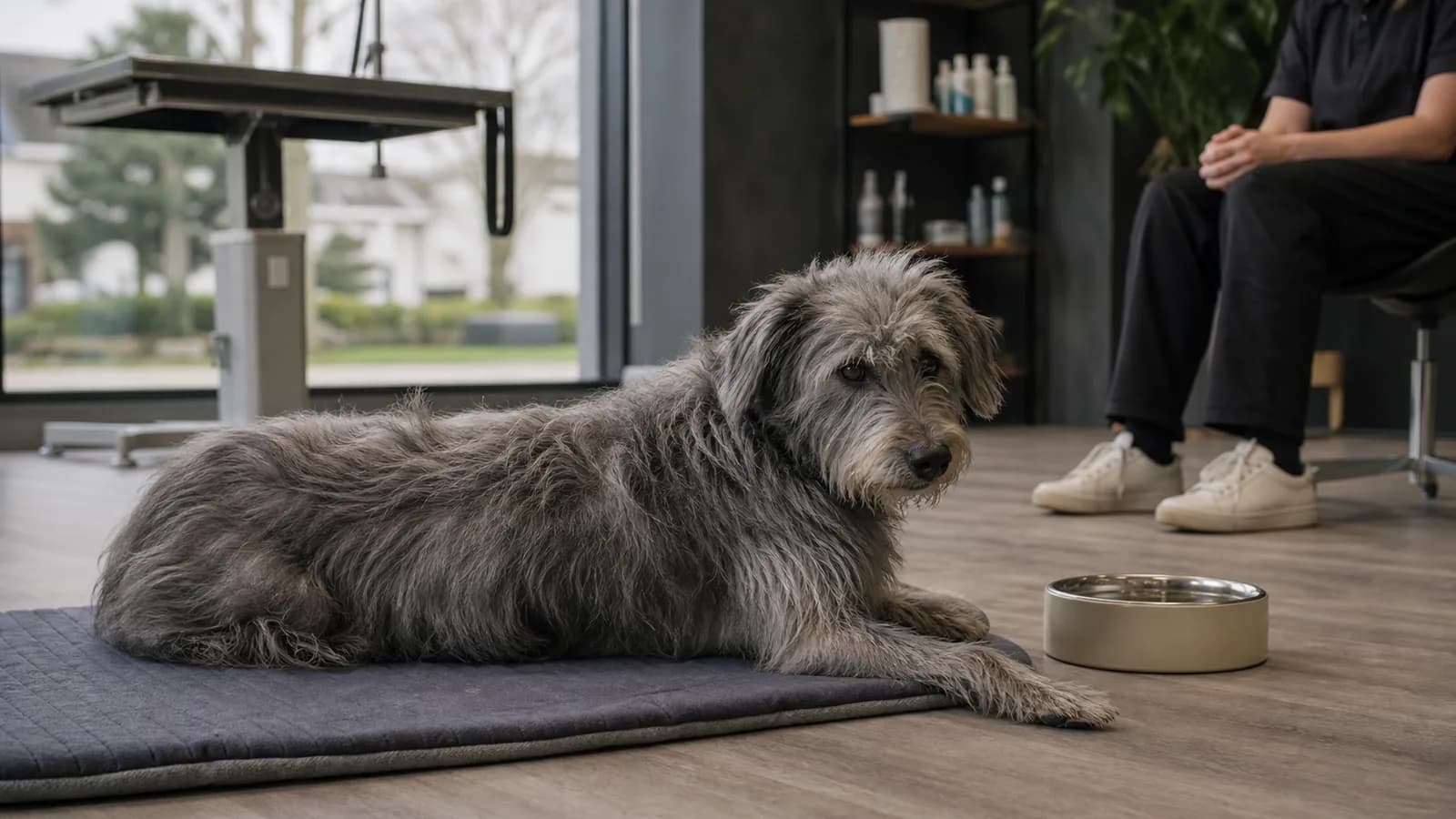
If a dog is too anxious to finish safely, stopping can be the right outcome. Ask which stage or body area caused difficulty, what stress signals appeared and what was completed. The next step may be a shorter introduction, a simpler comfort-led finish or veterinary assessment for pain. Repeated or severe fear should not be solved by forcing the groom.
Is an unfinished groom a failure?
No. A complete haircut is cosmetic; safe handling is essential. Continuing after a dog can no longer cope can increase the risk of injury and teach the dog that warning signals do not create distance. Stopping protects the dog, groomer and future options, even when the coat looks uneven.
An interrupted appointment also provides useful information: a dog may tolerate washing but not drying, accept body clipping but struggle around paws, or become less able to cope as the session progresses. That detail is more actionable than labelling the whole dog “aggressive” or “ungroomable”.
What should happen before your dog goes home?
- A clear list of completed and unfinished stages or body areas.
- A factual description of body language, handling changes and any snap, bite or injury.
- Any immediate coat-management issue created by the partial finish.
- Safe home instructions, without asking you to force the missing work.
- Whether new pain or another sign makes veterinary review advisable.
- A proposed next step, while avoiding promises that the next groom will be completed.
Ask questions while the sequence is fresh. Do not assume another charge, refund or rebooking arrangement; these are provider-specific and should be discussed directly. The useful handover is about what happened and what protects welfare now.
Why a dog may be unable to continue
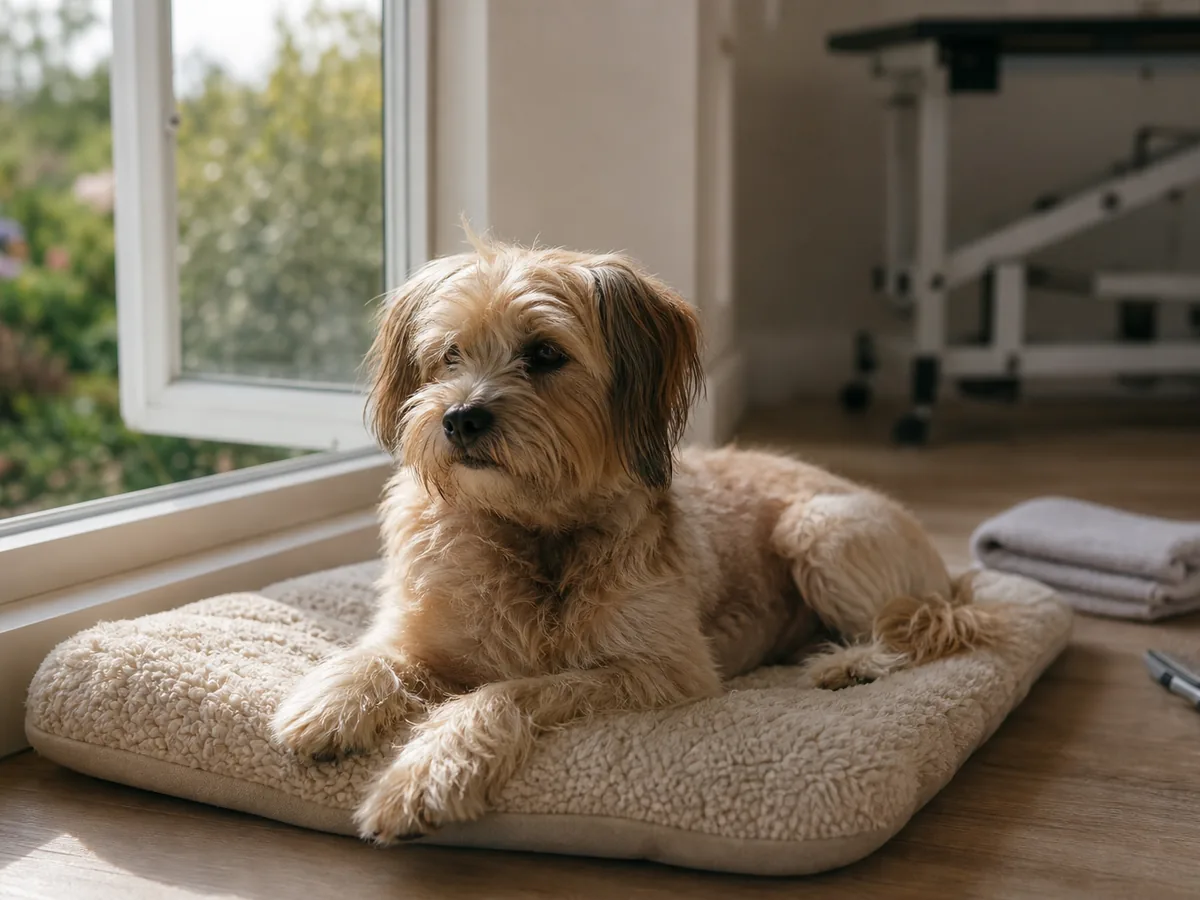
Possible contributors include accumulated fear, an unfamiliar environment, sensitivity to a dryer or tool, restraint concerns, painful matting, fatigue or discomfort in one body area. These are possibilities rather than a remote diagnosis. A sudden response or pain on touch changes the next step.
Learn how to interpret common stress signs at the groomer. Stillness, tense posture, turning away, repeated lip licking or yawning, hiding and growling matter in context. Escalation can happen when earlier signals do not create enough relief.
Choose the next step by what happened
Mild worry that eased with breaks
Ask whether the same groomer and routine could be used with a smaller goal and clear pauses. Familiarity may help, but do not assume the dog should repeat every difficult stage immediately or that improvement follows a fixed number of visits.
One specific trigger
If the problem centred on the dryer, paws, face or another predictable stage, make that stage the focus of the plan. The next appointment might avoid non-essential detail, use a different practical finish or test only a very small step while the dog is still comfortable.
Escalation, snapping or attempted biting
Do not punish warnings or immediately repeat the same full procedure elsewhere. Give your vet a factual history, especially when episodes are repeated or severe. After medical causes are considered, the vet may refer you to an appropriately accredited, ABTC-registered behaviourist.
Sudden change or apparent pain
Pain on touch, lameness, skin injury, ear symptoms, weakness or a new handling reaction needs veterinary assessment before another routine groom. Groomers can report what they observed but cannot determine the medical cause.
What a follow-up plan can look like
- Use the same factual handover so nobody has to rediscover the trigger by pushing the dog.
- Choose one modest goal or essential body area rather than requiring a full cosmetic finish.
- Agree stop criteria before work begins.
- Choose a practical coat length that reduces detailed handling where appropriate.
- Keep the groomer and routine consistent when that appears to suit the dog.
- Review what happened afterwards without promising progress on a timetable.
For broader preparation, read how to help an anxious dog with grooming and send the first-appointment information checklist. If matting contributed, follow the matted-fur safety guide instead of trying to finish close coat work with scissors at home.
The Floof approach in Herne Bay
The Floof Spa's anxious-dog grooming setup is one-to-one, with no salon queue or crates and breaks as needed. This environment may suit dogs affected by other dogs or a busy salon, but it is not a treatment or guarantee of completion. Joanne will explain what appears realistic from the history and the dog in front of her.
If you hope to remain nearby, discuss it before booking. Staying during grooming helps some dogs but distracts or unsettles others, so owner presence is agreed case by case.
Sources and veterinary escalation
The RSPCA grooming guidance advises patient, gradual and reward-based introductions and says dogs should not be forced through grooming. The PDSA body-language guide covers worried signals and notes that pain can increase aggression risk. For repeated behaviour problems, the RSPCA explains why to see a vet first and how to find an appropriately accredited behaviourist.