
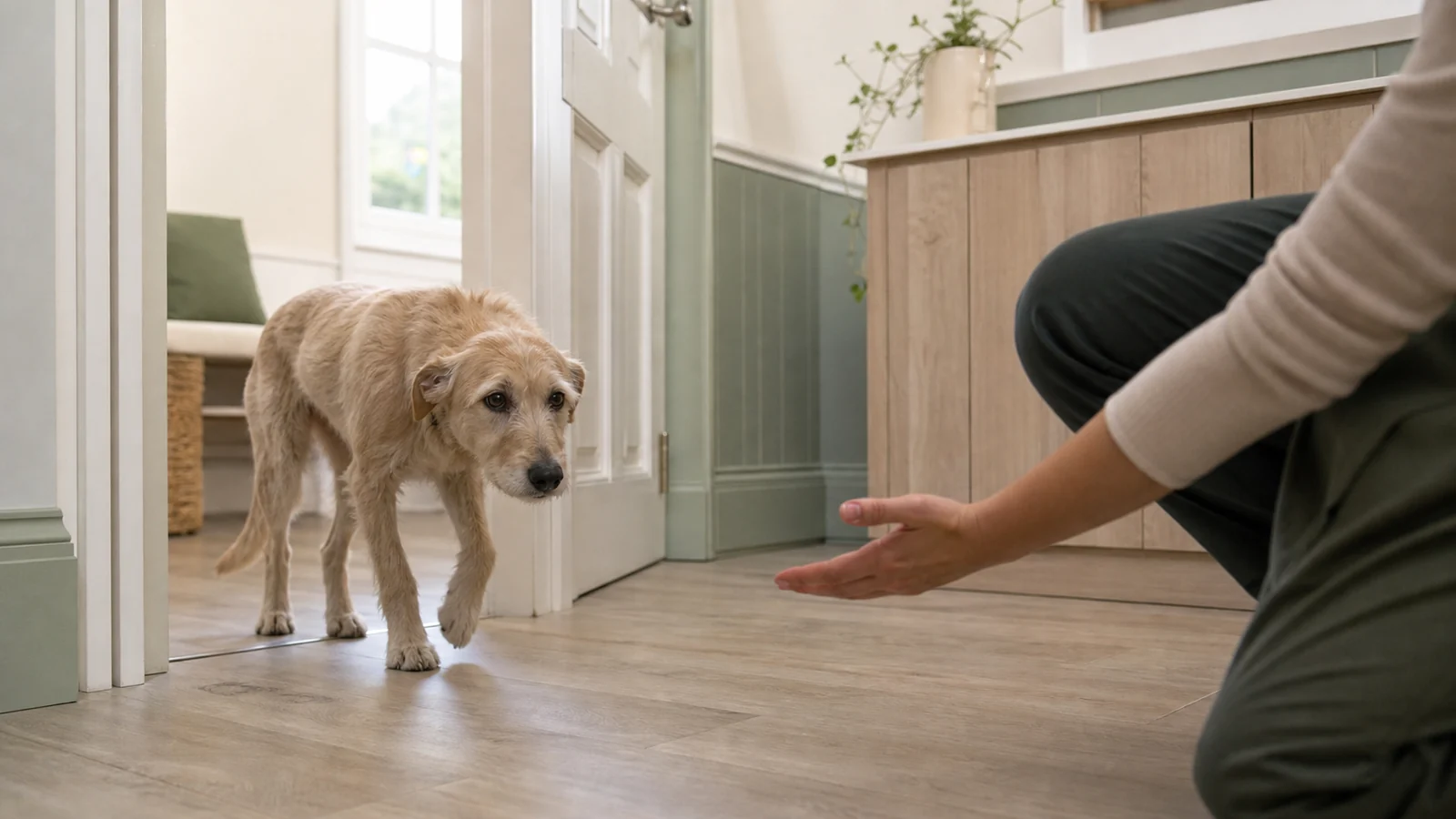
For a rescue dog's first groom, tell the groomer what is known and clearly label what is unknown. Practise brief, reward-based handling only within the dog's comfort, send current coat photos and disclose freezing, growling, snapping or escape behaviour. Agree a modest first goal. Unless coat or health needs are urgent, confidence and useful information matter more than a perfect haircut.
When should a newly adopted dog have a first groom?
There is no universal number of days a rescue dog must settle before grooming. Timing depends on coat welfare, current health, how the dog is settling and any advice from the rescue or vet. A clean, comfortable coat may allow time for observation and gentle introductions. Tight matting, contaminated coat or a suspected skin problem needs earlier professional or veterinary advice rather than a rigid waiting period.
Do not use scissors against skin-level mats or repeatedly pull at them while trying to prepare. Read the guide to matted fur and safe next steps, send photographs and explain whether the dog allows the area to be approached. Painful skin, wounds or sudden distress belongs with a vet.
Ask the rescue for a grooming handover
A short handover can prevent the first appointment becoming an experiment. Ask for records rather than assumptions, and pass useful details to the groomer without labelling the dog.
- Date and outcome of the last groom, if known, including any unfinished areas.
- Touch or handling notes: paws, face, ears, tail, lifting, standing and restraint.
- Observed triggers such as clippers, dryer noise, unfamiliar people, doorways or other dogs.
- Any muzzle history and its context; prior muzzle use does not by itself prove aggression.
- Known medical, mobility, skin or ear concerns and relevant veterinary instructions.
- Tools, rewards, cues or routines the dog previously tolerated.
If the rescue has no information, write “unknown”. Do not convert a gap in history into a confident story about neglect, trauma or previous grooming. The dog's behaviour now is useful evidence; a guessed explanation is not.
Low-pressure preparation at home
1. Observe before testing
Notice how your dog responds to ordinary touch, towels, household sounds and movement around narrow spaces. You do not need to test every sensitive body area. Record whether the dog approaches, turns away, freezes, moves off, stiffens, growls or seeks contact, and remember that body language must be interpreted in context.
2. Start with easy body areas
If your dog welcomes contact around the shoulder or side, use a brief touch followed by release and a reward they value. Build from familiar areas rather than immediately holding paws, lifting the tail or cupping the face. Stop while the dog is still comfortable.
3. Introduce tools without recreating a groom
Let the dog notice a brush at a comfortable distance. A dryer sound can be introduced quietly and far away only if this does not provoke worry. There is no need to turn the home into a salon or restrain the dog to prove they can cope. Tiny, uneventful exposures provide better information than one ambitious session.
4. Respect disengagement
Turning away, moving off, becoming very still, repeated lip licking, a tucked posture, growling or attempts to escape are reasons to pause. A growl is information, not disobedience. Punishing it can remove a warning without making the dog feel safer.
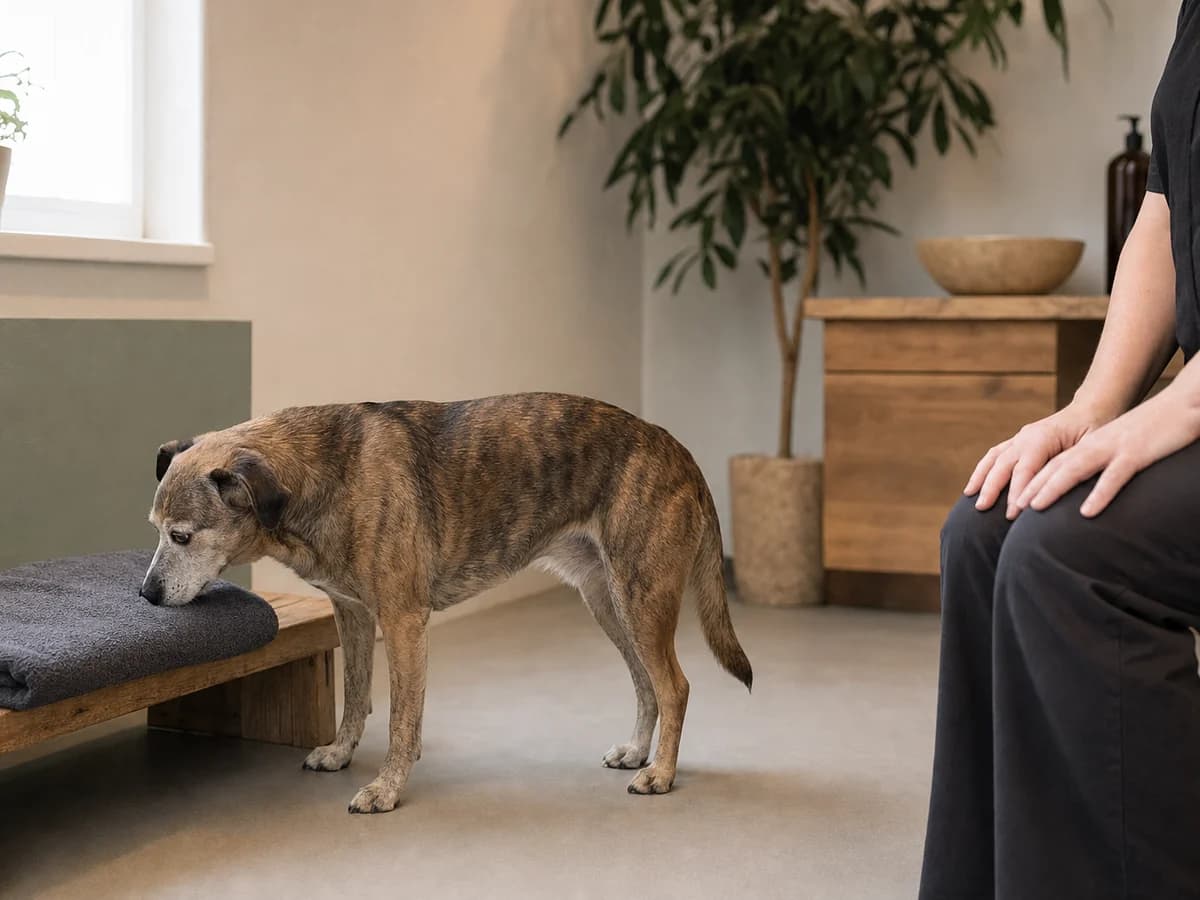
Set a modest first-appointment goal
The first goal might be a meeting and coat assessment, a manageable Bath & Dry or Full Groom, or essential comfort work only. Coat type, condition and the dog's response decide what is suitable. A rescue label does not automatically mean the dog is fearful, just as a friendly handover does not guarantee tolerance of dryers, feet or face work.
The Floof Spa's one-to-one studio has no crates or salon queue and allows breaks. This setup may suit a dog affected by other dogs or busy rooms, but it is not a cure for fear. The broader anxious dog grooming approach explains how Joanne plans around known triggers.
What the groomer needs when history is unknown
Share breed or coat type if known, approximate size and age, recent photographs, coat condition, rescue and vet records, and every handling response you have actually observed. Include snapping, biting, escape attempts and freezing without embarrassment. The first-appointment disclosure checklist gives a copyable structure.
Also state what you have not yet tried. “We have not touched his paws” is safer than “his paws are fine”. Honest uncertainty lets Joanne choose a lower-pressure starting point and decide whether the requested service can be offered safely.
Can you stay for the first rescue-dog groom?
Possibly, if agreed before the visit. Some dogs settle with their person nearby; others remain focused on them or try harder to leave. Read when an owner can stay during grooming and tell Joanne what you hope to do. Owner presence should be a practical, case-by-case choice, not a promise.
If the first groom cannot be completed
Stopping can be the safest outcome. Ask what was completed, which stage or body area became difficult, what signals appeared and whether pain may be involved. Treat the visit as information for the next plan rather than proof that the dog failed. Our guide to an unfinished groom explains the possible next steps.
A follow-up might use a smaller goal, but no one should promise that a full haircut will be possible after a set number of visits. New pain, sudden handling aggression or repeated severe fear should be assessed by a vet. If medical causes are excluded, the vet can advise on referral to an appropriately accredited behaviourist.
Sources and safety
The Royal Kennel Club grooming guide recommends asking a rescue centre what needs work and using little-and-often handling. The RSPCA's groomer guidance supports gradual reward-based introductions and says distressed dogs should not be forced. PDSA's body-language guide explains why signals must be read in context.